


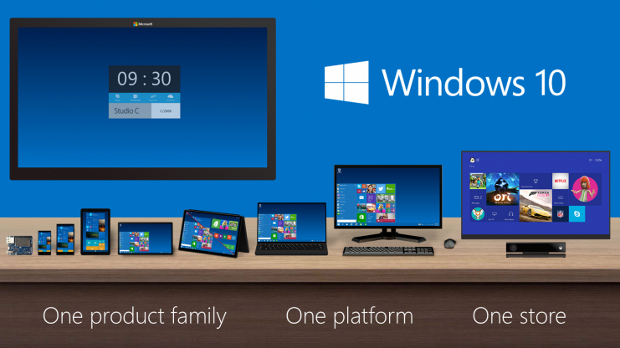
But Silver’s impression – that continued PC sales are also on Microsoft’s mind – has merit, too: The personal computer business in general, those powered by Windows in particular, is different now than in 2011.
Then, sales were booming. In the quarter when Microsoft introduced Windows 8’s Developer Preview, the PC industry shipped a record 96.1 million machines, what Computerworld has dubbed “Peak PC” because since then volumes have constantly contracted when measured against the same period of the prior year.
Now, PC sales are trying to climb out of a historic slump. In the third quarter of 2014, IDC estimated that computer makers shipped 78.5 million systems. If accurate, that would represent an 18% decline since the same quarter in 2011.

Another headwind for Microsoft is that more of the personal computers shipped in 2014 do not rely on Windows. Apple’s Macs, for instance, accounted for 6.3% of the September quarter’s estimated machines, half a percentage point more than the year before.
Bottom line: Sales of PCs running Windows will drop by more than 5% for the year.
Microsoft could soften any impact of the news of Windows 10 on this year’s fourth quarter sales – even if it made more noise about the new OS – by pledging that PCs bought now will be eligible for a free or discounted upgrade to Windows 10. The company has regularly done that in the past, but has typically waited until about four months before the new operating system’s release to do so.
Three years ago, Microsoft sold a $15 Windows 8 upgrade to customers who had purchased a Windows 7 PC starting 2 June 2011.
Most Microsoft watchers believe that Windows 10 will be a free upgrade from Windows 8.1, but Microsoft has not yet confirmed that.
Microsoft has said it will wrap up work on Windows 10 by mid-2015, but Silver was less optimistic about the timing. “We’ll probably see Windows 10 pre-loaded on devices for the holidays next year,” he said. “That would certainly make sense.”
Greg Keizer, Computerworld




 Ltd
Ltd