


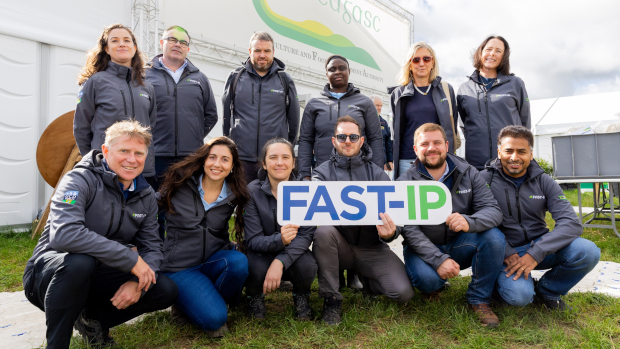
University College Dublin and Teagasc have launched the third Food and Agriculture Sustainable Technology Innovation Programme (FAST-IP), a 12-month programme aimed at developing new agritech start-ups.
The programme has attracted almost 300 expressions of interest, with 12 mid-career professionals selected following an interview process.
FAST-IP is delivered by the UCD School of Biosystems and Food Engineering and NovaUCD in partnership with Teagasc at the AgTechUCD Innovation Centre at UCD Lyons Farm in Co Kildare. It operates under the Innovators’ Initiative Programme, managed by Enterprise Ireland.

The programme focuses on needs-led innovation, with participants working to identify unmet needs in agriculture and food and develop market-validated solutions.
Participants will spend between eight and ten weeks immersed in agricultural environments, including farms, food processing companies and Teagasc locations.
Three teams from the first FAST-IP programme have recently secured a combined €1.9 million in commercialisation funding from Enterprise Ireland.
Agriwave, BiCO and Mehal will use the funding to develop their projects into commercially viable start-ups over the next two years. A total of 21 participants have now completed the first two FAST-IP programmes.
Emma Callinan, director of spin-outs and research commercialisation at Enterprise Ireland, said the programme was helping participants translate research and industry insights into new businesses.
“Developing globally ambitious, innovation-driven companies from Ireland’s research and knowledge base is a key priority for Enterprise Ireland,” Callinan said.
She added: “FAST-IP exemplifies the type of needs-led entrepreneurship that is central to this ambition, bringing talented individuals closer to customers and industry challenges, and equipping them to translate insight, research and innovation into commercially successful ventures.”
Professor Nick Holden, academic director of FAST-IP at UCD’s School of Biosystems and Food Engineering, said the level of interest in the programme demonstrated continued demand for food and agriculture entrepreneurship.
“Over the next 12 months they will work together to discover real world needs in the food and agricultural sector through immersive experiences in agrifood environments and develop innovative solutions to address the identified needs in a commercially viable manner with the aim of creating the next wave of agritech start-ups,” Holden said.
FAST-IP is aligned with Ireland’s Food Vision 2030 strategy, which aims to develop a sustainable food system balancing climate-smart agriculture with environmental and economic sustainability.
Dr Siobhán Jordan, head of technology transfer and commercialisation at Teagasc, said the programme would help develop a pipeline of innovators for the agrifood sector.
“Through FAST-IP, Teagasc and UCD are developing a pipeline of innovators with the potential to create new solutions, businesses, and opportunities that can make a real difference to the future of Ireland’s agrifood sector,” Jordan said.
The programme is also supported by the Southern Regional Assembly through the Southern, Eastern and Midland Regional Programme 2021–27.
Sasha Dunne, who completed the second FAST-IP programme, said the experience had helped her team develop a solution addressing the impact of grassweeds on wheat production.
FAST-IP is accredited by UCD at Level 9 on the National Qualifications Framework. Participants who complete the programme will receive a Graduate Diploma in Agrifood Innovation and Entrepreneurship.
Applications for the fourth FAST-IP programme, covering 2027/28, are due to open in early 2027.
Patryk Goron





 Ltd
Ltd