


Vertiv Holdings Co has acquired King Environmental Services, a Europe-based provider of fluid management, commissioning and load-testing services for high-density, liquid-cooled data centres and other applications. Financial terms of the deal were not revelaed.
The acquisition is expected to expand Vertiv’s global thermal management services capabilities into Europe, Middle East and Africa (EMEA) and advance its strategy to support customers across the thermal chain. KES adds specialised fluid management, commissioning and load-testing capabilities spanning system preparation, performance validation, monitoring, maintenance and lifecycle optimisation.
The transaction builds on Vertiv’s established North American fluid management presence, including its 2025 acquisition of PurgeRite, and represents the next step in expanding its global thermal and fluid management services platform. By combining KES’s regional field expertise and load-testing capabilities with Vertiv’s broader services portfolio, the company expects to provide more comprehensive support as customers deploy and operate complex AI and high-density infrastructure with greater reliability, efficiency and accountability.

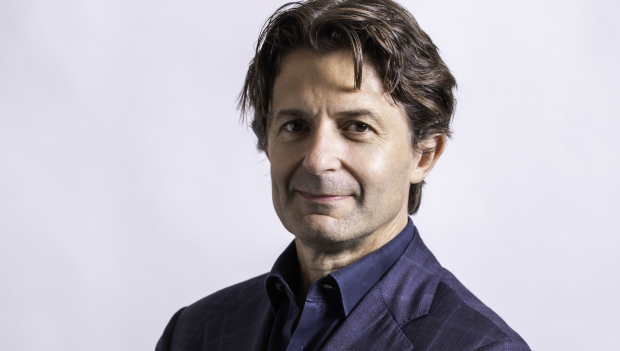
“As computing density increases, the performance of cooling and power infrastructure will depend as much on execution in the field as on engineering and system design,” said Gio Albertazzi, CEO of Vertiv (pictured). “Our acquisition of PurgeRite, in December of 2025, established an important fluid management foundation in North America, and KES is expected to build on that foundation in EMEA. Together, these acquisitions advance our strategy to provide the specialised expertise and disciplined execution customers need as they deploy increasingly complex infrastructure at scale.”
That need for disciplined execution is particularly important as high-performance computing and AI workloads increase heat densities and accelerate the adoption of liquid cooling. In these systems, fluid quality is critical to uptime, thermal performance and equipment life. Contamination, trapped air, corrosion, improper chemistry and flow imbalances can reduce heat-transfer efficiency, contribute to equipment degradation and create commissioning and operational risks. Beyond initial commissioning, customers need lifecycle fluid management services to support system availability, thermal performance, equipment longevity and operational economics.
The transaction is expected to close in the fourth quarter of 2026.
TechCentral Reporters





 Ltd
Ltd