



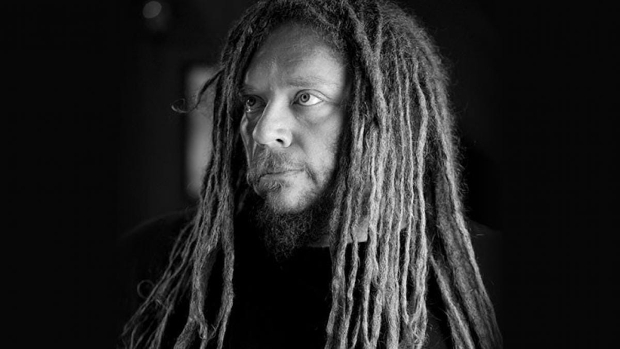
Almost everyone knows Neil deGrasse Tyson. He’s the celebrity astrophysicist who demoted Pluto in the popular imagination and has since turned up everywhere from The Big Bang Theory to voicing himself on The Simpsons and Family Guy. His guest last month on the StarTalk podcast is less of a household name, but for my money the more interesting man in the room. Jaron Lanier is a dreadlocked cyberpunk who has been around since roughly the birth of the Internet. He’s a computer scientist, scholar and futurist widely called the father of virtual reality. I first came across him during my time in digital humanities.
I came to him properly through his 2014 book Who Owns the Future?, whose argument now reads like prophecy: the Internet’s economics would make a handful of tech companies extraordinarily rich while hollowing out everyone else. So when Lanier reframes the entire AI debate, I’m inclined to hear him out.
And reframe it he does. On Tyson’s show, the father of virtual reality said, more or less, that artificial intelligence does not exist.

His claim is not that the technology is fake. It’s that we’ve chosen the wrong story about it. There’s a way of framing AI, he told Tyson, where it’s a collaboration of people rather than a new entity. Think of a large language model the way you’d think of Wikipedia – a vast document assembled from the work of many people – except, unfortunately, the contributions have been far less voluntary and the people far less visible. Reframe it that way and, technically, nothing changes but everything about how we treat it does.
Why, then, do we insist on the other story, the one where AI is a creature, an emerging mind, a new god? Lanier has a blunt theory. You’re a young man, you get paid a lot, you think you’re the centre of the universe. Of course you think you’re making God, he says. He softens it by admitting he was much the same at 20, back when he thought a room full of VR engineers was the most exciting place in the cosmos. (He would know a messianic tech culture when he sees it; he helped build one.)
Lanier’s reframe isn’t just a matter of humility: he argues that it’s the practical fix for problems the industry keeps failing to solve. We treat these models as a black box, he says, but when you open the box, all that’s inside is people in the form of the data they made and the work they did. We keep the lid shut because we’d rather have a deity than a workforce. If you prise it open, the intractable questions of security, quality, hallucination become, well, tractable, because you’re finally dealing with the human mechanism underneath.
This kind of comes full circle back to his 2014 book in terms of the topic of data dignity. Data doesn’t come from angels, Lanier says. It doesn’t come out of the dark matter. It comes from people, and from the work of people, and if we accepted this then we might build an economy that actually pays them for it rather than one that scrapes their creativity into an infinite future of slop and calls the result magic.
In the interview Lanier notes with some amusement that AI chatbots now write fluent defences of data dignity, having read so much about it. But the material they are arguing with is human, it came from us. If the bones of AI are human, why do we see it as inherently artificial? Shouldn’t we be trying to see the collaboration for what it is, and pay the people whose work is holding the whole thing up?



 Ltd
Ltd