


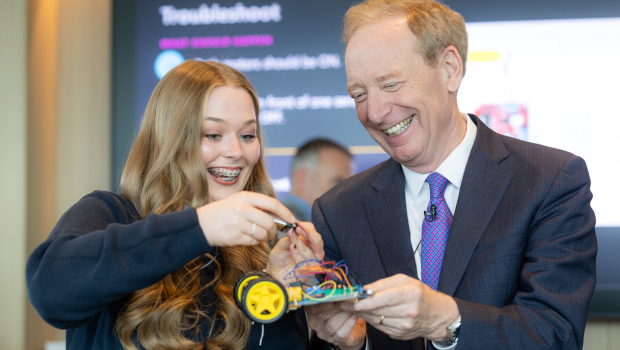
Microsoft Vice Chair and President, Brad Smith, today joined students, teachers and community representatives from Dublin and Kildare at the company’s data centre campus in Grange Castle to officially open its new €1m Dream Space hub.
Dream Space @ the Data Centre marks the next step in Microsoft’s mission to create lasting benefits for people living near its current and proposed data centre operations. More than 5,000 students from schools in Dublin and Kildare are expected to participate in learning sessions at the hub over the next 12 months. Providing a wide range of tailored STEM and AI experiences for primary and post-primary students, Dream Space @ the Data Centre will also help to build awareness of the wide-ranging career opportunities that exist in the digital infrastructure sector.
Through the new hub, Microsoft is delivering on its Data Centre Community Pledge to be a responsible and supportive neighbour to communities that host its data centres. Since 2018, Microsoft has invested over €6.5 million in Irish communities close to its current and future data centre operations, supporting programmes that advance community prosperity, sustainability and wellbeing and directly benefiting more than 135,000 people.

Dream Space was first introduced at Microsoft’s Leopardstown campus, One Microsoft Place, in 2018. Since then, more than 550,000 students have taken part in its STEM and AI education sessions, developing the skills and confidence to become the next generation of digital leaders. Building on Dream Space’s strong foundations in coding, robotics and AI, the new hub at the data centre features a new curriculum that introduces learners to the specific technology and skills needed to support the digital infrastructure sector. These will range from electrical engineering and physical computing to cloud operations. Supported by a mini data centre lab and many other hands-on learning experiences, the facility will bring to life the technology, skills and careers powering the digital world for learners.
Microsoft has invested €1 million in the development of the new hub. This comes from a €4m investment fund that was set aside by the company in March last year to help ‘Skill Up Ireland’ for the era of AI.
An integrated approach to STEM skills development across Dream Space @ the Data Centre and Microsoft Ireland’s other skilling and education initiatives, such as the Collinstown Data Centre Academy, will help to build awareness of pathways into further education, apprenticeships and careers in the data centre and broader technology sector.
Brad Smith, vice chair and president, Microsoft, said: “We have been part of Ireland for more than 40 years and see it as Microsoft’s home in Europe. As our presence continues to grow, so too has our commitment to creating lasting benefits for the Irish people. Since 2018, we’ve invested over €6.5 million in local data centre communities, benefitting more than 135,000 people. Microsoft ‘s Dream Space is the next step in that journey, giving thousands of young people the chance to experience and understand the technology behind the digital services they use every day, and envision a future career for themselves in Ireland’s digital economy.”
Lavinia Morris, general manager, Microsoft’s EMEA data centre operations said: “This new hub builds on Dream Space’s strong foundations in STEM, AI and digital skilling, while bringing students closer to the real-world skills, careers and opportunities shaping Ireland’s growing digital infrastructure sector.
“Over the next year, more than 5,000 students and teachers from communities near our data centre will enjoy the hub. Through hands-on experiences in areas such as physical computing, electrical engineering and cloud operations, learners will gain practical skills and direct exposure to the technologies that power the digital world. The new hub will deepen our connection to the local community, helping young people develop vital STEM skills for the future and gain a better understanding of the exciting possibilities that exist in the sector.”
TechCentral Reporters


 Ltd
Ltd