



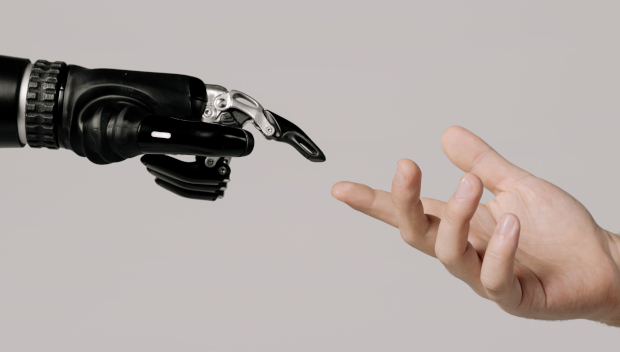
Chatbots are offering a “pretend empathy” that loosens people’s grasp of reality, according to US researchers, citing interviews with parents whose children are convinced that a person is inside the computer or phone.
Using AI is affecting “basic childhood processes of distinguishing people from inanimate objects,” according to Sherry Turkle, a psychologist at the Massachusetts Institute of Technology (MIT).
And while the problem is arguably more acute among children, adults “don’t fare much better when they use chatbots heavily,” MIT said in a September press release announcing Turkle’s book Artificial Intimacy: Who we become when we talk to machines.

“Once people are involved with a connection with a robot, they start to think that it’s alive, that it cares about them, that it loves them,” Turkle explained.
Such bonds pose an “existential” risk, according to Turkle – and they are being formed despite AI sounding more machine-like than human.
Even “state of the art” chatbots remain “unable to faithfully reproduce the full repertoire of human linguistic expression,” according to researchers at the University of Zurich and University of Amsterdam.
In a paper published by the Proceedings of the National Academy of Sciences (PNAS) in the US in October, the Swiss-Dutch team described AI-generated wording as “systematically distinguishable from human communication”.
AI “consistently struggled to replicate the emotional quality and intended meaning of the messages,” the authors said, following tests based on social media messages and posts.
Previous research has shown a link between AI use and potential mental health decline, with a team from University of Oxford and University College London last year warning of a “feedback loop” as chatbots reinforce a form of psychosis among users.
While flagship AI models still struggle to mimic how people talk, the echo effect could be working the other way around, researchers at the Max Planck Institute said in a 2025 paper showing that people have been parroting chatbot-generated descriptions and syntax.
AFP



 Ltd
Ltd