


Ireland’s cyber security sector is being urged to strengthen collaboration between industry, government and academia as artificial intelligence creates new risks for critical infrastructure and the wider digital economy.
The issue was a central theme at the fifth annual Cyber Ireland National Conference (CINC26), which brought cyber security leaders together in Kilkenny on Tuesday.
Held under the theme ‘Realising Ireland’s Cyber Industry Potential’, the conference examined the global cyber threat landscape, cyber innovation, workforce development and emerging security risks associated with AI.

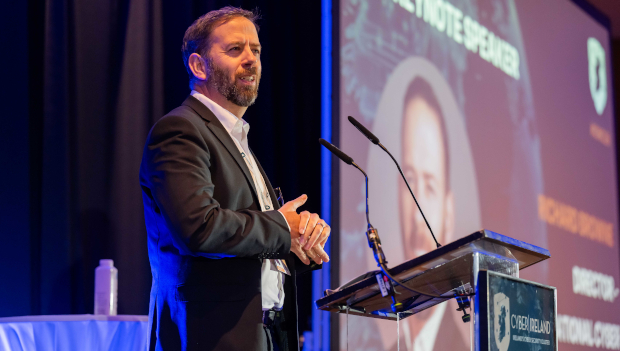
Richard Browne, director of the National Cyber Security Centre (pictured), delivered a keynote address on the state of Ireland’s cyber security landscape, including the protection of the country’s digital infrastructure, economy and society.
Dr Jayne Goble, global leader for OT cyber security services at KPMG, addressed the changing threat environment and the protection of critical infrastructure. Goble said attackers were increasingly focused on operational disruption and the use of AI against critical infrastructure.
Ireland’s position as a major digital hub made it particularly exposed to such threats, she said, pointing to the country’s role in Europe’s digital supply chains.
The conference also highlighted the economic contribution of Ireland’s cyber security industry.
Cyber Ireland’s Cyber Security Sector Snapshot 2024 identified more than 535 companies operating in the sector, employing almost 8,000 people and contributing €1.2 billion to the Irish economy annually.
Eoin Byrne, cluster manager at Cyber Ireland, said cyber security was both a requirement for protecting Ireland’s digital economy and an opportunity for economic growth.
The sector had created highly skilled jobs, attracted multinational investment and produced Irish companies developing cyber security products for international customers, he said.
“Through strong public-private partnership and investing in skills and innovation, Ireland can strengthen its position as a global industry leader in cyber security,” Byrne said.
The conference took place during Ireland’s EU Presidency year, with Cyber Ireland highlighting the relevance of cyber security to the Presidency’s themes of competitiveness, values and security.
Approximately 75% of transatlantic cables pass near Irish waters, while Ireland is also a major European data centre hub, according to Cyber Ireland.
The organisation said those factors underlined the importance of protecting Ireland’s infrastructure as well as the wider European digital economy.
CINC26 also featured Cyber Solution Days, a European cyber security innovation competition where selected Irish and European companies presented their security solutions to industry leaders.
Start-ups, SMEs, multinational companies, critical infrastructure providers, Government bodies, researchers and educators took part in the event, with discussions focused on collaboration, partnerships and business growth.
Cyber Ireland represents more than 220 organisations across Ireland’s cyber security ecosystem, according to the organisation, and was established in 2019 to support sector growth and address cyber skills shortages.
Patryk Goron



 Ltd
Ltd