


Almost half of consumers in Ireland discarded a low-cost electronic gadget unused, after a single use or within a month, according to a survey published ahead of International E-waste Day.
The WEEE Forum Fast Tech Consumer Study found that 44% of Irish respondents had discarded a so-called fast tech product in that period in the 12 months to July 2026.
Fast tech includes mini-fans, decorative lights, low-cost headphones and speakers, power banks, chargers and electronic toys often bought on impulse.

Nearly two-thirds (64%) said the shortest time they had used an item before discarding it was six months or less.
The survey also found that more than one in three respondents had put at least one unwanted device in the bin, while more than one in four kept unused items at home. Fewer than half had brought at least one item to a recycling centre or in-store recycling point.
The study was conducted online by Bellegarde Scientific Consulting for the WEEE Forum, with participation from WEEE Ireland, and covered 12 European countries. It included 1,003 respondents from Ireland and was published ahead of International E-waste Day on Wednesday, 14 October.
Nine in 10 Irish respondents had bought fast tech in the previous 12 months, compared with eight in 10 across the countries surveyed, according to the study.
Separate research by WEEE Ireland found that fast tech purchases in Ireland reached 91 million items last year.
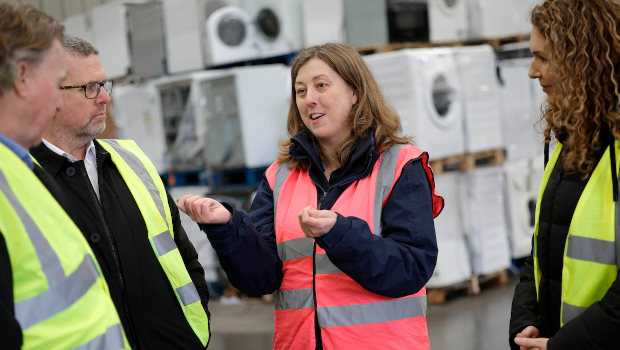
Elizabeth O’Reilly, director of environmental compliance and circular economy at WEEE Ireland (pictured), said inexpensive gadgets bought on impulse could be treated as disposable.
“One product improperly discarded may seem insignificant but when that behaviour is repeated across millions of purchases, these gadgets can become a growing waste problem,” O’Reilly said.
She said consumers might not realise that small novelty products could contain electronic components and materials that should be recovered.
Among the 776 Irish respondents who answered why they had stopped using fast tech products, 52% cited breakage or a defect. However, 83% said they would be willing to pay more for at least some similar products if they lasted longer.
The disposal figures suggest that recycling remains a challenge. More than one in three respondents said they had binned at least one unwanted device, while more than one in four kept items at home. Respondents could select more than one disposal method.
O’Reilly urged consumers to repair or reuse electrical products where possible and recycle them when they reached the end of their useful life.
“When it reaches the end of its life, it should be recycled through the free take-back options at participating retailers and civic amenity sites, so its materials can be recovered for use again as part of the circular economy,” she said.
She also warned that many fast tech products contain lithium batteries, which can be damaged during waste processing if discarded in household bins, potentially causing fires in waste collection vehicles or at recycling centres.
WEEE Ireland said consumers, retailers and civic amenity sites had helped establish Ireland’s electrical recycling system over the past 20 years. The organisation is encouraging people to bring unwanted fast tech products to their nearest recycling point.
Patryk Goron




 Ltd
Ltd