


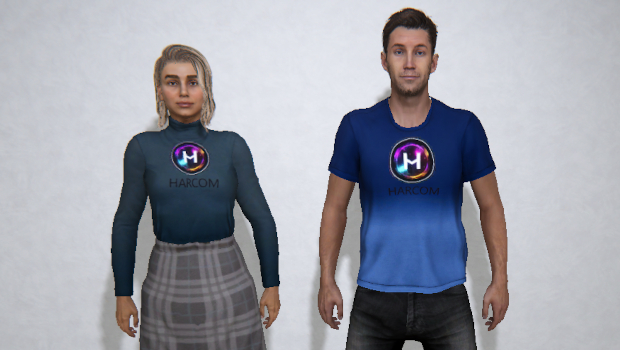
Johan and Johanna have identical brains, literally identical. Both are AI assistants running on the same OpenAI language model and giving the same kind of answers to the same kind of questions but the difference is cosmetic.
Johan sits at your virtual desk in jeans and a T-shirt and speaks with a male voice. Johanna wears a skirt and speaks with a female one. So, you can probably guess where this is going.
In a study co-authored by Dr Mary Hausfeld of University of Limerick’s Kemmy Business School and researchers at the University of Zurich and SKEMA Business School, 189 knowledge workers donned VR headsets and brainstormed workplace problems with a series of AI assistants. Afterwards, they were given real money (up to four Swiss francs a task) to split between themselves and the assistant.
While Johan earned an average of CHF 2.96, Johanna only got CHF 2.54, and men and women alike short-changed her.

The best part came in the follow-up interviews. Of the 34 participants quizzed, 30 said an assistant’s gender would make no difference to how much they trusted or rewarded it. One pointed out, reasonably enough, that a machine doesn’t actually have a gender.
The researchers call this a ‘metacognitive blind spot’ where we can be aware of the fairness principle but we just don’t notice ourselves breaking it. One participant caught themselves mid-interview, insisting appearance shouldn’t affect reward before realising they had paid the more human-like assistant more (the study also looked at text-based versus robot versus humanlike assistants).
Some AIs more equal than others
There is a darker revelation though. Participants also rated Johanna as less human-like than Johan even though a pilot study found the two avatars scored similarly. The authors are being quite scrupulous here: they can’t say whether Johanna was paid less for presenting as female or for seeming less human. But they point to existing research showing women are sometimes perceived as less than fully human so that mightn’t be two explanations so much as one problem wearing two hats.
Nor is this a once-off. In 2018, film scholar Dr Amy Chambers of Manchester Metropolitan University traced the pattern through sci-fi movies and found that male AIs tend to be menacing (think HAL 9000, the Terminator et al) while female ones are servile, like Joi, the made-to-order holographic companion in Blade Runner 2049. A year later, UNESCO’s report I’d Blush If I Could, which was named after Siri’s deeply icky once-standard reply to a sexist slur, warned that female-voiced assistants cast women as obliging helpers, available on demand. And last year, researchers at Trinity College Dublin, TU Dublin and LMU Munich found that players in a Prisoner’s Dilemma game/thought experiment exploited female-labelled AI partners more than others.
With this kind of research, the usual caveats apply: this was a 30-minute lab session in a single country, with one avatar per gender, and the money was framed as funding the AI’s development rather than strictly calling it a wage. Nobody is suggesting Johanna needs a union rep for the resulting ‘pay gap’.
But the experiment works as a mirror if you think about it. Ireland’s gender pay gap stood at 9.6% in 2022, according to the CSO, and the State has already missed the 7 June 2026 deadline to take on the EU Pay Transparency Directive. In the real world, the gap gets muddied by part-time work, career breaks and occupational segregation. Here, all of that was stripped away. Same brain, same output, same job. She still earned less.
So while we seem to worry endlessly about AI learning our prejudices, Johanna suggests the more pressing question is whether we’ll ever unlearn them.




 Ltd
Ltd