


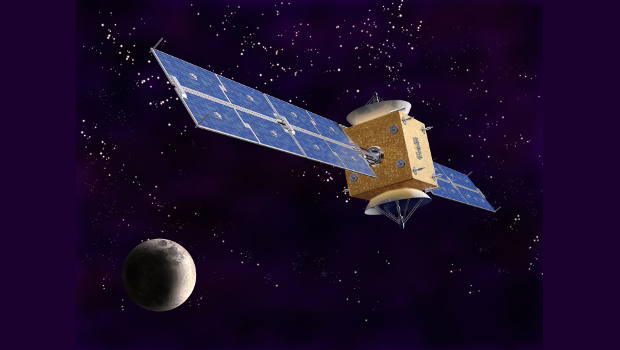
Tech giant Google will use satellite imagery to detect methane leaks. Location software and AI technology can then be used to find out which plants the powerful greenhouse gas is escaping from.
The MethaneSAT satellite will be launched into space next month. From there, it will take images of methane leaks on Earth. An algorithm should reveal the sources of the leaks. The team behind Google Maps can then figure out the immediate location of tanks, pipelines and mines where methane is escaping. “That should help us better understand what kinds of installations contribute most to methane leaks,” said Yael Maguire of Google Geo Sustainability.
Google is not doing this project alone. The tech giant is collaborating with the US environmental organisation Environmental Defense Fund, Harvard University and the New Zealand Space Agency, among others.

The satellite will primarily monitor emissions from oil and gas facilities. Agriculture and waste disposal also emit methane, but that is not the focus. By mapping the exact locations of methane leaks, the Environmental Defense Fund hopes to hold operators of oil or gas facilities accountable to plug those leaks.
The United Nations environment programme also tracks methane leaks through satellite imagery. Over 2023, 127 leaks were detected. Only one of those leaks was subsequently sealed with certainty. The hope is that more leaks will be plugged when their locations are more accurately imaged and attributed to specific companies.
This is necessary because methane is a greenhouse gas that contributes to climate change accounting for about 20% of the greenhouse effect. The unique thing about methane is that it disappears from the atmosphere after decades. But because new methane is constantly being added, its concentration remains high. By reducing methane emissions, the amount of the greenhouse gas gradually decreases. The earth will then warm less quickly.
Meanwhile, global methane emissions from the energy sector continue to rise.
At the climate summit in Dubai, 50 major energy companies, which together account for a third of the world’s fossil fuel production, pledged to virtually eliminate methane emissions during their production by 2030. Parties such as Shell, BP and ExxonMobil have pledged to do so, but far from every oil giant is joining in.
News Wires




 Ltd
Ltd