


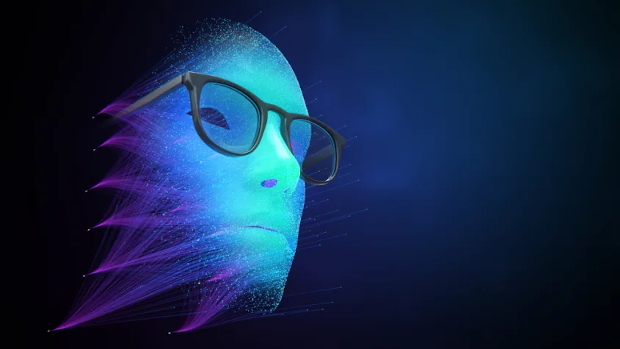
New provisions from the European AI Act will require technology companies, from Sunday onwards, to identify synthetic media and deepfakes.
Although the legislation aims to ensure that AI-generated material can easily be distinguished from reality, specialists are concerned that technical shortcomings and a lack of uniform industry standards could obstruct the actual enforcement of those laws.
To steer the rise of artificial intelligence in the right direction, the EU set up a specialised AI office two years ago and adopted extensive regulations.
An important part of this legal framework is the introduction of transparency requirements for generative AI, such as ChatGPT and Claude. These rules are particularly strict with regard to deepfakes – highly realistic audio or image manipulations that imitate real people – in order to prevent the public from being misled by fabricated events or statements.
The European Commission recognised that there is a difference between creative expression and malicious use. Consequently, synthetic content intended for fiction, satire or art is generally exempt from those disclosure obligations. For example, a widely circulated AI image of the Pope in a puffer jacket was regarded as a joke however other applications, such as creating explicit images of celebrities can be used to disseminate disinformation during conflicts, are potentially destructive.
To counter those risks, the EU has proposed a voluntary code of conduct. This framework encourages the use of visible labels and machine-readable tags to inform users when content is artificial.
These obligations apply to both AI developers and professional users, although private individuals are exempt. The strategy is based on a collaborative network involving social media sites, fact-checkers and technology companies to implement detection tools.
Despite these efforts, several significant obstacles remain. Firstly, the borderless nature of the Internet means that deepfakes produced outside the EU’s jurisdiction can easily enter the European market.
Secondly, there is no universal technical standard for labelling. Companies use various, mutually incompatible methods, such as metadata and watermarks, resulting in a fragmented landscape.
Finally, digital markers are often unstable and can be removed during file compression or editing.
Because of these vulnerabilities, experts argue that no single solution is sufficient. A technical report from the European Commission suggests that a layered defence – combining multiple marking and detection strategies – is the most effective approach.
As AI continues to develop at a rapid pace, the success of the AI Act will depend on whether the EU can adapt its enforcement mechanisms as quickly as the technology itself.
Business AM




 Ltd
Ltd