




The needs of the business and its users are always the context today, Abel believes. “Private cloud is the perfect example. Security came across as the primary concern in lots of well hyped surveys, but number two was invariably integration with existing applications — always inherently complex — and three was the available skills. We did some serious research earlier this year with IDG which showed that as the business tries to innovate and go to market faster those considerations move to the top.
“Enterprises can utilise public cloud to dip toes in the water, act quickly and learn, then have the confidence to bring it all back on to private cloud and go to what is necessarily the second speed of ICT — integration with existing applications. There are also going to be elements that IT leaders will shield from change because they are proven and durable and unless there is a business imperative they can stay at that second speed.

“That survey showed clearly that what has been most successful in private cloud is the standardisation of IT, precisely because it removes complexity. More success has also come from having strong governance and controls. But the second most acknowledged success area was the support of key business decision makers.

“In all of my conversations recently the one thing that has emerged as the most important is IT change management,” Abel says. “The people and business culture barrier is often both as complex and as challenging as the technology barrier. You have to dig to see if the complexity is really in the systems or if it is in fact a perception of the humans? Or is it because lack of governance and control has allowed a spider’s web of integration to just grow?”
Consistent look and feel
Microsoft has been on a well marketed journey for some years to deliver simplicity and ease of use across all of its products and services. “We all know about today’s big challenges, from Big Data to mobile to cloud to automating everything possible,” says Paul Hennessy, Dynamics lead in Microsoft Ireland and the main man in serious business IT engagements with its customers.
“We have now moved on from a long time when we saw various point solutions and a best of breed philosophy — still not entirely invalid — to a recognition that IT has matured and that approach now actually causes productivity problems for the users. With any change between the systems being accessed, even if it is essentially invisible to the user, the experience is poorer than it might be, less productive and there is an IT cost and overhead at the back end in managing disparate systems.
“Of course such systems are integrated to a degree,” he concedes. “But the transitions between applications will always be clunkier than necessary — and more difficult to change. Our approach across the board is to make things look and feel the same for the users.” That even applies, Hennessy says, to bespoke applications in the enterprise which can be presented through Windows so that they look and feel the same as all the other functionality.
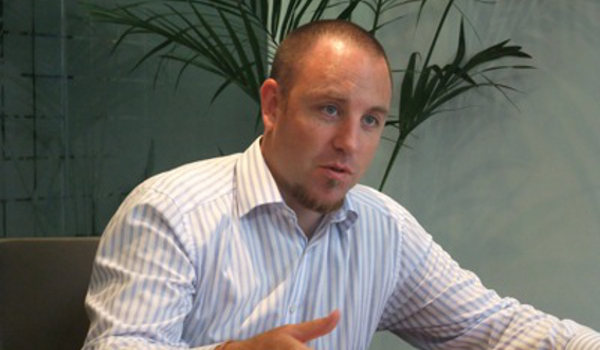
Touching on the continuing rise in analytics as a good example of inherent complexity to be delivered simply, Hennessy says: “One version of the truth is still the touchstone for any report or analysis, followed immediately by the whole question of access to that information. In the Microsoft environment that is controlled through the single sign-on. But behind the scenes there is a complex set of business rules that ensures that people only see what they are entitled to but at the same time the information is not invalidated by being based on partial data.
“Everybody in business today understands that general and daily information necessity in business and it is an excellent example of simplicity in individual use supported by complexity and a high degree of automation in the platform and the systems.”
User perspective
Of course this is in fact the 21st century approach to business and consumer systems design across all sectors. “There is nothing as complicated as simplicity” is the way John Evans describes it. He is manager of the IBM Briefing Centre in Dublin, which works with major clients in tailored programmes to examine and find strategies or approaches to solutions for their business objectives or challenges.
“You have to understand everything from the users’ perspective, what is going to make them want to use it. We have been introducing IBM Design Thinking into all of our workshops and client sessions in recent times. Essentially, we have a methodology for innovation in business ICT that is flexible and of value in helping any client identify and broadly define what it needs,” Evans explains.


 Ltd