


Offshore wind farms are often located in harsh and remote environments, making inspections difficult, expensive and sometimes dangerous. MARINEX (Marine Robotic Inspection and Exploration System for Offshore Wind) aims to improve how floating and fixed-bottom offshore wind turbines are inspected and maintained.
The project is led by University of Limerick, with support from Dublin Offshore Technology and Wind Energy Ireland will run until February 2029 and is funded by the Sustainable Energy Authority of Ireland (SEAI) under the National Energy Research, Development and Demonstration Programme.
Building on the success of the previous SEAI-funded project, Robots for Wind Farms’, this new research will address challenges identified by industry partners and develop smarter, safer ways to manage offshore wind infrastructure.

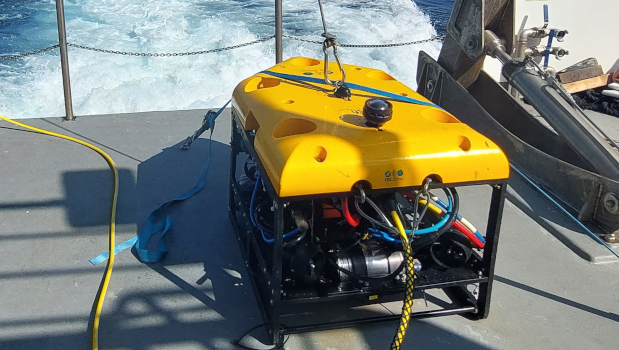
The project will use advanced remotely operated underwater vehicles (ROVs) and an unmanned surface vehicle (USV), which can be controlled remotely from land-based centres. These robots will be guided by real-time data from sensors placed on the turbines and visualised through 3D digital models. Artificial intelligence (AI) will be used to automatically detect issues such as marine growth, cracks and damage, reducing the need for manual inspection.
The project will consider a range of critical offshore wind inspection requirements, including subsea structures, cables and mooring systems. Dublin Offshore Technology will contribute specialist industry knowledge in mooring systems and marine operations, drawing on its experience developing the load reduction device (LRD), its patented technology for reducing loads within mooring systems.
By making inspections more efficient and less reliant on large vessels or offshore crews, the project aims to lower costs, reduce risks and help ensure turbines operate safely and reliably.
MARINEX aims to strengthen Ireland’s research and innovation ecosystem in marine robotics, AI and digital energy systems, contributing to long-term energy sustainability and national decarbonisation goals.
Speaking about the research, Dr Edin Omerdic, MARINEX project lead at University of Limerick, said:“This marine robotics project will support safer and more efficient inspection and maintenance of Ireland’s future offshore wind infrastructure, reducing the need for personnel to carry out certain activities in challenging offshore environments. With the imminent offshore wind development on the east and south coasts of Ireland, it is a timely research project that will help speed up inspections and maintenance with the latest marine technology.”
Francesca Martini, programme manager of research, development & demonstration at the Sustainable Energy Authority of Ireland, added: “Ireland’s offshore wind sector will play a central role in delivering our clean energy ambitions, and innovation will be essential to ensuring this infrastructure can be operated safely, efficiently and cost-effectively over its lifetime. Through the SEAI National Energy Research, Development and Demonstration Programme, we are pleased to support the MARINEX project, which brings together industry and academic expertise to advance the use of marine robotics, artificial intelligence and digital technologies for offshore wind inspection and maintenance.”
Darren Hayes, technical director at Dublin Offshore Technology, said: “As Ireland moves towards building offshore wind at scale, we also need to think about how these assets will be inspected and maintained throughout their operating life. MARINEX brings together strong Irish capability in offshore engineering, marine robotics and digital technologies to address that challenge. We are delighted to bring an industry perspective to the project and help develop solutions that can make offshore wind operations safer and more efficient.”
TechCentral Reporters


 Ltd
Ltd