



“If you are developing a new product in the conventional way, making a prototype requires you to make a tool first and if that prototype doesn’t work, then you need to make a new tool and so on. But with 3D printing you can print 15 different designs of your product in one go and see which one is best. That’s an unheard of degree of flexibility,” he said.
Multi-prototyping
The SEAM research centre is based in the Waterford Institute of Technology and has one metal printer amongst its equipment. Part-funded by government and part funded by industry, it is currently partnered closely with three companies — a medical device company, a precision engineering company and a food manufacturing company.
“Using our metal printer, our build plate is currently 28 centimetres by 28 centimetres so if you if you are building a product that’s 10 centimetres tall, you can fit five this way and five that way and so print 25 different designs at the same time. You can find the best and then go and manufacture that,” said Dr Raghavendra.

“That level of iteration would be extraordinarily expensive to do by conventional means. It would take a lot of time, money and difficulty to do that.”
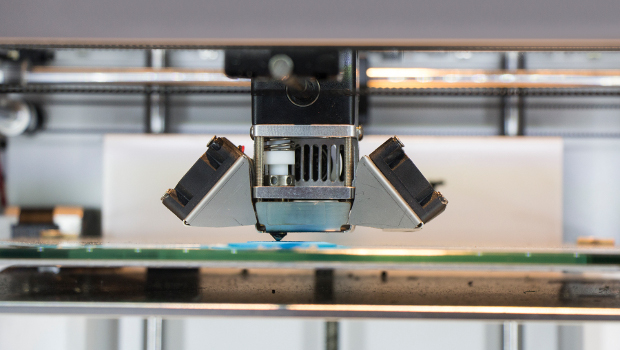
U3D’s Laefer adds that in addition to prototyping, depending on the volume required, 3D printing can also be used to produce products on demand.
“The machines are still slow so you might be waiting 24 or 72 hours for something to print, but you don’t need to get it shipped from China, there’s no import charges and no customs to deal with,” she said.
As an example, Laefer said that U3D is currently working with a company to produce a bespoke casing for a hotel door system.
“It houses electronics and would be massively expensive to produce for a limited run, but if this product takes off they can go to injection moulding. Until then, they don’t need to waste money on those costs.”
Right now it is here, in the area of bespoke small runs of high value products and in the area of customisation, that there is most value for the enterprise. While most of what U3D produces is covered by non-disclosure agreements, Leafer will say that customised products are big business.
“There is huge push for that in the market right now, and that’s something we’re seeing the effects of. Eventually of course we’d like to see the technology progress to the point that it obsoletes injection moulding. Think of the waste that could be saved by companies not needing to maintain stock piles of spare parts.”
Product stock
In theory the enterprise of the future that is involved in supplying physical products could cease holding stock, instead manufacturing on a just in time basis using 3d printers. All that would be needed would be CAD files for each object, with orders filed and customised on demand.
“It could change entirely the whole nature of production cycles. But that’s many years away — today’s 3D printers are slow and the biggest available only have a capacity of a cubic metre. That said, the patents on metal printers are just expiring so that should open up potential developments.”
Laefer also said that much will become clearer as new agreements are signed on standardised materials and printer designs.
“ASTM International and ISO will have a joint set of standards on 3D printing materials and that will make things easier. A lot of the high end machines use proprietary filaments and if you use someone else’s materials you’re violating the warranty on them but at the moment, there is no standard printing material so when we get a new material we have to test it ourselves. All of that has to happen to move the industry along.”




 Ltd
Ltd