



One side effect of living in the fast-paced, bleeding edge world of IT is that things appear to change so quickly. Events go by at breakneck speed. So fast, in fact, that people often feel powerless to intervene, even if it’s only to slow things down just a little bit.
It’s part of a process to create a ‘forced inevitability’ about the progress of tech which, at this point, is more or less synonymous with AI. Almost as soon as you’ve started to say “Maybe we should take some time to make sure this all makes sense”, something else has happened and the attention shifts to that. And so on and so forth.
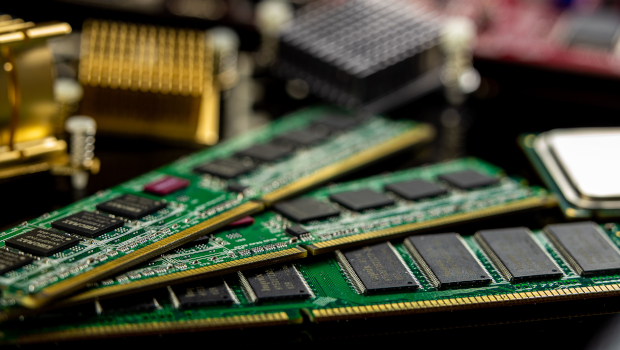
For example, it hardly seems like two weeks ago or so that OpenAI head honcho Sam Altman was bemoaning the fact that the little people were using RAM in their PCs when it could be better employed in AI data centres instead.

Speaking on John Collison’s Cheeky Pint podcast, he said: “From a global allocation perspective, actually, it’s quite terrible to have everybody have a bunch of the world’s limited supply of DRAM sitting in their own computer and being used maybe 5% of the time. Like, you want maximum utilisation in the cloud if you’re trying to deal with this supply constrained environment. And somehow many people’s intuition is the opposite of that.”
I don’t know about you but to some people that might sound a little bit like… socialism. Anyway, his comments conveniently ignore the fact that the reason so much of the world’s limited supply of DRAM is sitting in people’s own computers is because the people who make computers and who write the software (ie the tech industry) have been engaged in a relentless process of upgrading memory and CPU requirements to run their products for years and years.
One of the driving forces of the industry has been a forced obsolescence designed to ensure companies and individuals upgrade their computers every three to five years.
In that context, my attention was momentarily drawn away from all things AI by a report in IT Channel Oxygen of a keynote speech by Omdia senior analyst Ben Caddy at the recent Canalys Forums EMEA event.
In it, he predicted that “35% of all the hardware sold through the EMEA channel will be taken back by partners and the ITAD companies they work with. This is going to be primarily motivated by the sheer economic logic of taking the equipment back, recovering value, and then embracing more circular IT life cycles.”
I have to say that this is an argument that I am very happy to endorse although I do wonder if that 35% figure might end up being slightly lower than what could be feasible.
Understandably, Caddy identified RAM as one of the major motivators for taking back older technology. With RAM pricing unlikely to stabilise anytime soon, there was a “tremendous opportunity” for partners embracing circular IT solutions, he argued.
Which brings us back to Altman who sought to counter the backlash against his comments by taking to X, writing: “I actually do want the world to have tons of memory and people to put as much as they want in their computers, and it is fucking annoying that this was taken out of context. I have been arguing for the world to ramp up memory production for a long time.”
This seems a little bit weird, don’t you think? I mean, his attempt to defend his previous remarks seems to be that although people are only using 5% of DRAM in their PCs which, from a global allocation perspective is “terrible”, he actually believes they should be allowed to “put as much as they want in their computers”. Er…
Ironically, this reply revealed something else about Altman’s thinking which goes some way to explaining how the tech overlords have approached the issue of meeting the energy, water and land demands required to fuel their insane projections for AI data centres. Not forgetting the consequences of those resource demands for the rest of us. Actually, it often seems like they do. Forget.
Anyway, the utopian ideal is for more resources to be magicked up to meet the demands of everyone. For memory production to be ramped up somehow to be able to meet the insatiable demand from AI while fulfilling the more mundane requirements for PCs, games consoles and other devices.
Somehow, in this wonderful world, there is no cause for friction at all. Memory production can be massively increased overnight. I mean, it would have to be, wouldn’t it? Otherwise, the choice would be between the AI companies having to wait for production to ramp up or for the rest of us lowly people facing delays. Gee, I wonder which one would lose out in that scenario. Oh wait, we already know the answer to that one. It’s us.
So, having looked at it again, can anyone explain what part of Altman’s statement trying to defend his previous remarks actually makes any sense at all? But then in our fast-paced industry, maybe no one has the time to do that before the next thing comes along.
The human cost of AI
Speaking of the next thing, the turmoil surrounding the affair between Nvidia CEO Huang Jensen and alleged Chinese spy, Alice Huang, gives rise to two thoughts. One is that there’s something darkly comical about the relentless rise of the poster company for AI being brought low by an all too human indiscretion. The other is that this brings a very different meaning to what I thought was meant by having your own AI agent.



 Ltd