


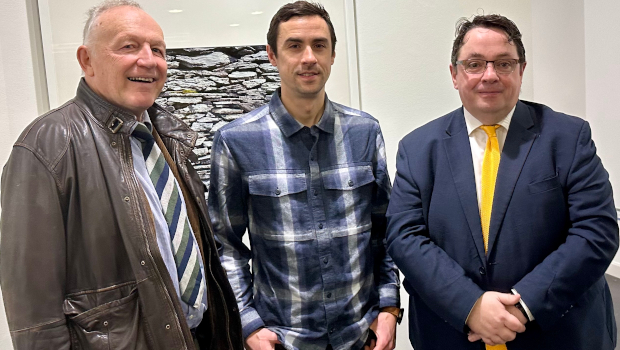
UCC research probe link between microbiota and social anxiety
Research from APC Microbiome Ireland (APC) at UCC has discovered that microbes in the gut could be playing a key role in social anxiety disorder (SAD).
The findings in the study Social Anxiety Disorder-associated Gut Microbiota Increases Social Fear suggest that gut microbiota can play a role in the heightened social fear response tied to SAD.
The analysis builds on recent findings that SAD patients have distinct microbiomes compared with healthy individuals. By that transplanting microbiota from six patients with SAD into mice, this resulted in the mice exhibiting increased sensitivity to fear conditioning during social interactions as well as changes to immune and brain functions.

Prof John F. Cryan, vice president of research & innovation, UCC, said: “SAD is an increasing issue for the human population, so it is vital to explore new treatments to address the condition. Discovering a link between the microbiota and the SAD condition is a significant breakthrough that the microbiota represent potentially a therapeutic target.”
Dr Nathaniel Ritz, researcher, APC, said: “SAD has become a pertinent issue; it causes fear and anxiety in common social situations, which can be very debilitating and negatively impact quality of life. Our study shows that the microbiota in SAD is capable of driving symptoms characteristic of the disorder. This makes for exciting possibilities in the effort to develop therapeutics for patients suffering with SAD.”
Prof Paul Ross, director, APC, said: “At APC we are continuing to discover how the microorganisms in our gut can affect a wide variety of human illnesses and conditions including those involved in mental health and wellbeing. SAD can be a crippling condition, and this new discovery opens up new therapeutic avenues which take the microbiome into account with the possibility to change its composition to improve health.”
TechCentral Reporters



Subscribers 0
Fans 0
Followers 0
Followers