



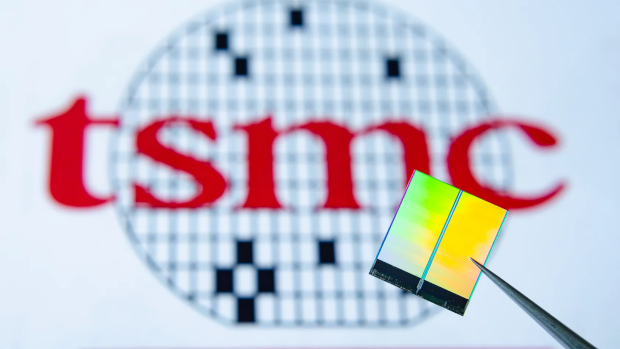
In order to limit the risks of Chinese dominance in the field of critical minerals, chipmaker TSMC is looking into ways to remove rare earth elements from its production machines. According to sources familiar with the situation quoted by Reuters, the semiconductor giant wants to protect its production of advanced chips from possible disruptions caused by Beijing’s strict export rules.
Last year, China introduced licensing requirements for rare earth elements, magnets and processing techniques. These measures exposed a major vulnerability in the international chip industry.
Rare-earth magnets are essential for the motors that drive automated production systems. A shortage of these components can slow down the production of chips that are vital for defence, AI, data centres and mobile devices.

Industry executives indicate that TSMC has started asking its suppliers about the feasibility of motors that do not require rare earth elements. Although these talks are still at an early stage and have not yet led to large-scale adjustments to the equipment, they are driven by the threat of instability in the supply chain.
These corporate initiatives tie in with broader strategic objectives shared by Taiwan and the United States to reduce their dependence on Chinese mineral resources.
Raymond F. Greene of the American Institute in Taiwan recently noted that Washington is working with its allies to tap into new sources of supply and to improve the robustness of processing capacities.
At the same time, the Taiwanese government is investing in the Industrial Technology Research Institute (ITRI) to increase domestic capabilities in the field of rare earth elements. Taiwan’s Minister of Economic Affairs, Kung Ming-hsin, announced plans to establish a pilot production facility within three years. It should cover about half of Taiwan’s domestic needs.
This research has attracted considerable interest from US officials who are seeking to diversify the global supply of critical minerals. Although ITRI confirmed its cooperation with Taiwan’s Ministry of Economic Affairs for this project, it did not provide further details.
Business AM


 Ltd