


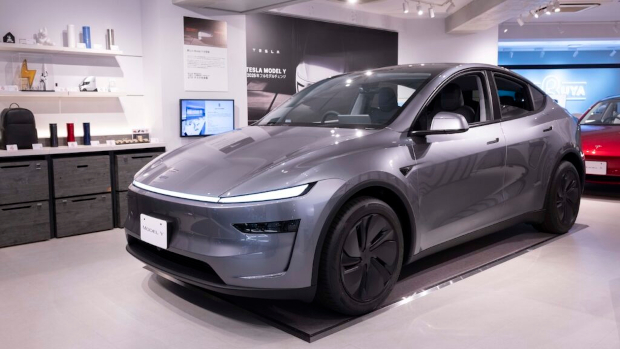
Tesla’ s long-awaited robot cab service launched last weekend, but with significant limitations. Despite falling stock prices and sales, the company is pinning its hopes on autonomous driving. The initial launch in Austin, Texas, involves a select group of Tesla users who can book rides in a limited number of vehicles via an app, all under the supervision of a safety driver.
This approach, with a human attendant in the passenger seat, echoes previous strategies by companies such as Yandex. Critics argue that this falls short of true robot cab functionality, as described by publications such as Forbes. It is agreed that true autonomous driving is only possible if humans are completely excluded from driving.
Tesla’s service is currently limited to a small part of downtown Austin and uses only 10 to 20 vehicles initially. Musk claims that most new Tesla models already have the technology necessary to drive themselves, and envisions millions of autonomous Tesla vehicles dominating the robot cab market with a share of more than 90%.

Experts are sceptical that Musk relies solely on cameras for autonomous driving and ignores the more expensive lidar sensors used by competitors such as Waymo. Waymo, currently the leader in the robotic cab sector, boasts more than 1,500 vehicles that have completed more than 250,000 passenger trips without human intervention.
Tesla’s cost advantage depends on the success of Musk’s camera-based approach. The company is deploying Model Y vehicles for its Austin robot cab service, with plans to produce a dedicated robot cab model without a steering wheel and pedals next year. Currently, a Tesla employee guides each ride, who can intervene if necessary. Passengers authenticate through their apps, according to user accounts. Many Tesla robot cabs are followed by support vehicles and can be controlled remotely. By contrast, Waymo operates completely autonomously within a much larger area of Austin.
Business AM




 Ltd
Ltd