


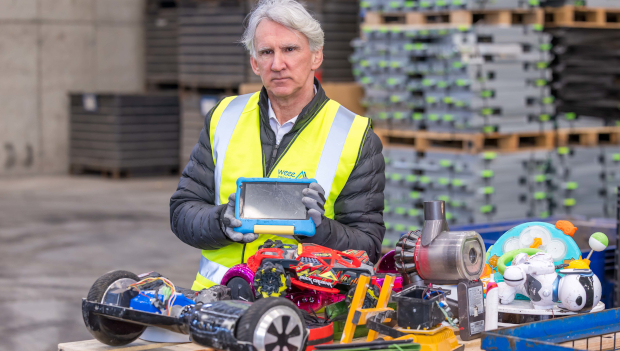
Record year for e-waste recycling yet outdated EU targets not a cause for celebration, says WEEE Ireland CEO
Consumers recycled a record 21.1 million electronic and electrical waste items in Ireland in 2025, up from 18.8 million in 2024, new data shows. However, despite the record performance, the country’s largest e-waste recycling scheme warned that the European measurement system fails to capture the full picture of the nation’s recycling progress.
Waste Electrical & Electronic Equipment (WEEE) Ireland said that by measuring recycling as a percentage of sales, the system does not properly reflect longer product lifespans or emerging waste streams.
The organisation’s annual report, detailing progress in its 20th year of operation, showed that close to 39,000 tonnes of e-waste were collected nationwide last year – or 7,425 truckloads.

The report also revealed that 84% of counties increased their WEEE recycling rates year-on-year, while an average 82% of materials collected were recovered for reuse in manufacturing, exceeding EU recovery requirement of 80%.
The e-waste haul included 18.5 million small appliances, 1.9 million lighting products, 278,222 TVs and monitors and 123,060 fridge-freezers.
Achievement
A total of 1,284 tonnes of portable waste batteries were also collected, achieving the EU’s 45% battery collection target.
Lithium battery collection more than doubled in five years, while more than 1.4 million vape devices were recycled through WEEE Ireland’s national takeback scheme.
WEEE Ireland CEO Leo Donovan said the current system measures e-waste collection against the volume of new electrical goods placed onto the market over the previous three-year period, with Ireland falling short of Europe’s 65% collection target.
In 2025, Irish producers placed 25kg of household electrical equipment per person on the market.
“Ireland is recycling more electrical waste than ever before and consumers are making a real effort to do the right thing. But Europe’s current measurement system was designed for a very different market,” said Donovan. “Current collection rate targets do not adequately reflect modern consumption patterns, long product lifespans, or emerging technologies such as solar PV systems and heat pumps.
“These products may not enter the recycling stream for decades, yet they are already included in today’s sales-based targets. With the re-evaluation of the WEEE Directive in progress, WEEE Ireland supports a more modern approach to measuring the effectiveness of national recycling systems.”
Donovan said “quality recovery” is becoming just as important as collection volumes as Europe seeks to secure critical raw materials needed for renewable energy systems and future manufacturing technologies.
“Europe is moving towards a model where circular economy performance will matter just as much as collection volumes,” he said. “The focus now has to move beyond simply collecting waste to ensuring valuable materials including lithium, copper, cobalt and aluminium are recovered to strict standards and kept within the circular economy.
“Ireland is well positioned to respond to those changes due to sustained investment in our recycling infrastructure, compliance systems and public awareness campaigns over the past two decades.”
TechCentral Reporters



Subscribers 0
Fans 0
Followers 0
Followers