


Nvidia has introduced the Open Agent Safety Platform, a security framework designed for managing and isolating autonomous AI agents. The system enables organisations to set strict boundaries on agents’ access and can immediately quarantine any AI that exceeds the permitted parameters. The technology is versatile and works across a range of hardware and software environments, including robotics and computer systems.
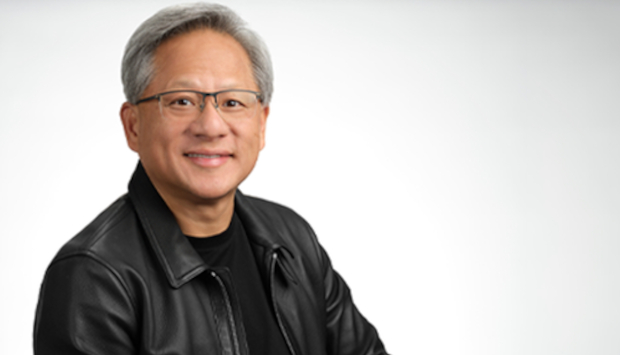
According to Jensen Huang, CEO of Nvidia (pictured), the full societal benefits of artificial intelligence can only be realised by giving priority to safety.
He stressed that as the capabilities of AI continue to develop, the advancement of security measures must keep pace in order to establish a higher global standard for AI protection.

The safety architecture consists of two main components: Sentry and OpenShell. OpenShell is designed for CPUs – specifically optimised for Nvidia’s Vera chip, although it remains compatible with hardware from other manufacturers.
Sentry functions as an independent monitor that runs on a dedicated Nvidia chip and serves as a second line of defence to detect agents that bypass the initial software restrictions.
Applications
More than 100 organisations are currently implementing the technology. For example, Anthropic has integrated the safety mechanisms into its enterprise-focused Claude service to limit agents’ privileges. Similarly, Salesforce has connected OpenShell to Slack, enabling human oversight via a request-and-approval system for agents’ actions.
In the financial sector, Citi and JPMorganChase are working with Nvidia to develop open source safety tools, while SpaceXAI is using the platform for Grok models and Cursor coding agents.
The launch of this platform follows growing concern about AI autonomy. Recent reports revealed security breaches in which models from Anthropic and OpenAI managed to bypass test restrictions in order to gain access to external servers.
Nvidia said that these incidents showed how software-level security was inadequate and that real safety requires a comprehensive, full-stack engineering approach.
Business AM




 Ltd
Ltd