


| Viable DR strategy | |
| “Cloud computing, with its high degree of virtualisation, offers an opportunity to keep applications running without incurring the high capital cost of lots of redundant equipment” | 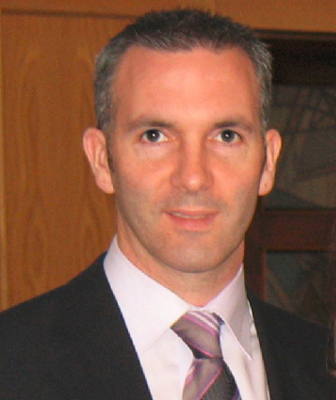 Xterity (Egenera) (Ireland): Fergal Quigley Xterity (Egenera) (Ireland): Fergal Quigley |
| Businesses trust their IT advisors to provide them with cost effective IT solutions appropriate for their needs. During tough economic times budgets are reduced and businesses may ignore the critical need for business continuity solutions.In better economic conditions measured and cost effective solutions are still needed. With flexible cloud based technologies now available, business continuity does not need to be expensive — and the IT advisor can more closely shape needs to expenditure.Cloud computing, with its high degree of virtualisation, offers an opportunity to keep applications running without incurring the high capital cost of lots of redundant equipment.
In many cases the basis for high availability and disaster recovery in the cloud is server virtualisation, where everything from the operating system, applications and data is encapsulated into a virtual machine (VM). But with converged infrastructure solutions, applications that require full physical servers or aren’t easily virtualised can gain the same advantages of simplified deployment and administration, automated high availability and DR and reduced infrastructure cost. Consider this as a way to ensure that all of your applications have a viable DR strategy. Done right, it also can reduce the operational costs for testing, operating and managing a highly available environment. In times of growth it is even more important for businesses to Return To Operation at the best Recovery Point Objective as quickly as possible, so they can drive revenue to enable them to grow in the good times. 
|
|
| The overlooked | |
| “The time lag between the application going live and the applications being added to the DR is a hidden risk within the business continuity plan” |  Savenet Solutions (Ireland): Lorcan Cunningham, MD of Savenet Savenet Solutions (Ireland): Lorcan Cunningham, MD of Savenet |
| The three main areas that we see being overlooked are:1) DR infrastructure and configuration is lagging behind the rapidly changing production environment. Something we often see on new customer sites is that as new applications are being delivered in production, the primary SAN and compute infrastructure are scaled up to meet the new resource requirements. However, the DR infrastructure is often either forgotten about or postponed until suitable funds and resources can be allocated to successfully add the new applications to the DR.The time lag between the application going live and the applications being added to the DR is a hidden risk within the business continuity plan. The problem arises from the traditional DR implementation of trying to maintain two sets of identical infrastructures, production and DR, and all the capital and resources costs associated with this.2) In the event that employees have no access to the office, the question arises of how to deliver the applications from the DR environment to the end users quickly and efficiently. In most business continuity plans, the IT infrastructure DR consists of replicating the servers to the DR site. If the production infrastructure goes down the servers failover to the DR site and the users in the office are re-routed to the DR LAN. However if the users have no access to the office or their desktops, due to flood or fire, then getting users access to the desktop applications is something that is overlooked in this situation. As desktop applications are constantly changing with patches and upgrades, it is hard to keep desktop images up to date if you have an office recovery site. This can mean added delays in getting your users productive again. 3) IT departments are under pressure to deliver production applications and have little or no time for DR and BC testing. More often than not due to a lack of resources and time pressures to maintain SLAs to the business, DR tests get pushed out or not done and back-ups and replicating checks may not get checked on a daily basis, thus adding hidden risks to the business continuity plan. At Savenet, our cloud DRaaS allows our customer to concentrate on their production environments while utilising our cloud platform to deliver DR infrastructure on an OpEx model that can be scaled up and down on short notice, giving our customers flexibility and CapEx cost savings. Since Savenet DRaaS is delivered from the cloud or a customer’s secondary site, we can deliver end user desktop applications over the internet to any device with a web browser, such as a home PC, thin client or tablet. We can deliver SAP to an iPad if the customer wishes!
|
|
| Sense of exposure | |
| “We’ve witnessed successful ransom-ware attacks that have threatened the very existence of a victim’s business” |  Ergo (Ireland): Steve Blanche, head of Professional and Cloud Services Delivery Ergo (Ireland): Steve Blanche, head of Professional and Cloud Services Delivery |
| A common aspect overlooked when thinking about disaster recovery and then business continuity, is that we often think of disasters in earth shattering forms such as massive storms, earthquakes, or tsunamis. But this is essentially a false sense of exposure or risk, as simple things can be disastrous; power outages could last an hour or they could last two or three days. Malware that cripples all of your client computers or servers or even both, could render your business impotent. We’ve witnessed successful ransom-ware attacks that have threatened the very existence of a victim’s business.The statistics also clearly demonstrate the danger from within, employee malevolence, incompetence, or simple accidents deleting data only to discover the nightly back-ups which reported to be successful, are in reality unusable. Tape corruption or erroneous reporting are real factors but can be neutralised with regular test restores, ideally running full system restorations but at a minimum, we’d recommend frequent restores of data selections to validate the integrity of those back-ups, delivering peace of mind.Keep up to date and automate wherever possible. Today’s virtualisation and cloud technologies deliver system consolidation onto modern easily recoverable platforms that lend themselves to business continuity utopias such as site to site replication-highly available clusters stretched between geographically spaced locations. Nobody wants to deal with legacy applications requiring manual effort and management.
At Ergo our Disaster Recover service replicates an organisation’s entire live production environment to our cloud-hosted services ensuring its business as usual whatever occurs. We offer full restore testing and validation procedures, providing disaster recovery compliance documentation for insurance providers and regulatory bodies, giving you the confidence you need in the viability of your recovery and business continuity plans.
|
|




 Ltd
Ltd