


Intel reported a drop in profits and revenue for the first quarter, as the biggest PC market slump in recent memory weighed on its business.
Intel reported a profit of $2.05 billion for the quarter ended 30 March, down 25% from a year earlier. Revenue was $12.6 billion, Intel said, a drop of 2.5%.
About two-thirds of Intel’s revenue comes from its PC client group, which makes chips for laptops and desktops. Revenue from that division was down 6% year on year, to $8 billion.
Its data centre group, which sells server chips and other enterprise hardware, fared better. Quarterly revenue from that division was up 7.5% year-over-year, to $2.6 billion.

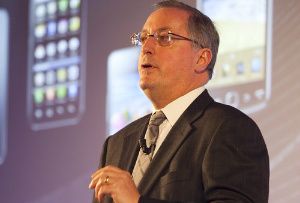
CEO Paul Otellini (pictured) put a positive spin on the results. "Amidst market softness, Intel performed well in the first quarter and I’m excited about what lies ahead for the company," he said in a statement.
Intel is predicting revenue for its second quarter to be $12.9 billion, plus or minus $500 million. It’s expected to announce new chips based on the Haswell microarchitecture later in the quarter. They’ll replace chips based on its Ivy Bridge microarchitecture, which have been shipping for about a year now.
Intel has tried to invigorate the PC market with ultrabooks, a category of thin and light laptops that can support touch and other tablet-like features. While many ultrabook models have been released, sales have been slow partly due to high prices.
Intel is still trying to make its presence felt in the fast-growing smartphone and tablet market, which is dominated by ARM. Intel is scheduled to start shipping new smartphone and tablet chips to device makers this quarter, who will start testing them for use in products. The first tablets based on the chips, code-named Bay Trail, are expected to appear late this year.
Just a month away from retirement, Otellini reflected on his four decades with the company during his last quarterly earnings call with analysts and reporters.
"Even as I prepare to pass the baton to a new generation, I know Intel’s story is not completely written," Otellini said.
After joining Intel in 1974, Otellini held multiple technology and marketing positions before he took over as CEO. He followed a long line of distinguished names, including CEOs Craig Barrett, Andy Grove, and founders Gordon Moore and Robert Noyce.
It’s still not known who will replace Otellini as CEO, and an announcement is expected by 16 May when Intel will hold its annual shareholder meeting. Top candidates include Stacy Smith, Intel’s CFO and senior vice president; Renee James, senior vice president and general manager of software and services; and Brian Krzanich, chief operating officer and senior vice president. All three were promoted to senior vice president on 20 November, the same day Otellini’s retirement was announced.
IDG News Service


Subscribers 0
Fans 0
Followers 0
Followers