


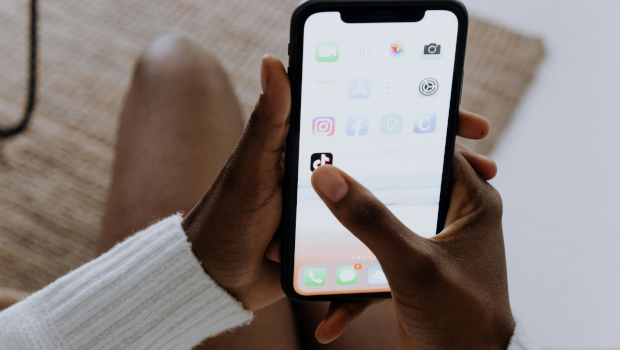
Social media giant ByteDance has finalised a deal to establish a new majority American-owned, or at least American-friendly, joint venture, TikTok USDS Joint Venture LLC, to avoid a US ban on the app.
American and global investors will hold 80.1% of the venture, with China’s ByteDance retaining 19.9%. The three managing investors, Oracle, Silver Lake, and Abu Dhabi’s MGX, will each hold 15%. The venture, the new owners say, will secure US user data and algorithms in Oracle’s cloud, with the recommendation algorithm retrained on US data.
ByteDance will maintain ownership of revenue-generating operations like e-commerce and advertising through a separate division, and US president Donald Trump thanked his Chinese counterpart Xi Jinping for approving the deal, calling it a win after years of battles over national security concerns.
In short: money will be made. Mansions in Hawaii will be expanded. Influencers will peddle influence.
But, taking a longer view, it looks like the social media era is coming to an end. It wouldn’t be the first time: once heralded as the great new democratic dawn, blogging is already dead, usurped by Facebook, Twitter, and with economic incentives glued on, YouTube and TikTok. A few refugees, more in hope than expectation I suspect, are trying to recreate the newspaper without any infrastructure – or any understanding that beats exist for a reason – by fleeing to Substack, which seems to me a curious alternative to working for a press baron. Capricious they often are, and usually ideological to boot, but typically more interested in facts than the escapologists from reality in venture capital land.
The simple fact is that times change. Consider free and open source software (FOSS), for instance. There are countless interesting FOSS applications today, such as a favourite of mine the Haiku operating system, and it is undeniable that Linux is the dominant operating system in the server room. Indeed, if you consider Android to be Linux (which is debatable, but not entirely inaccurate) it is also a major player in smartphones. Add in the fact that Apple’s macOS and iOS share design DNA and Unix heritage, and are based on FOSS core technologies, and it becomes undeniable that FOSS runs the world.
At the same time, though, plenty of FOSS projects are withering on the vine, with much of the heavy lifting now being done by megacorporations such as IBM subsidiary Red Hat, Google and Apple. What happened? Simply, time passed.
Companies dependent on FOSS infrastructure for their products, naturally, invest in it. Individuals who bashed the keys late into the night for reasons of passion?
Some keep going. Andreas Kling’s SerenityOS project is both a staggering technical achievement and, he says, a form of therapy. Good for him, but no business will bet the farm on it: after all, what if he discovers the benefits of walking in the park?
Speaking for myself, I know the feeling: last year I wrote a philosophical novel with, likely, nowhere to go. Not the kind of work that will cause bestselling authors any sleepless nights. Nevertheless, it was an interesting exercise, and better than watching more YouTube videos. Sometimes we just need to prove to ourselves that we exist.
Among our programmer buddies, others saw start-up bonanzas and jumped ship. Still more just got older and, with it, had greater responsibilities to attend to than iterating something on Github. The gaping maw of mortgages, kids, fending off the void, taking diazepam to get through the news… that kind of thing. Perhaps most significant of all, the hacker culture that gave birth of FOSS in the 1970s, and named it in the 1990s, is just not as strong as it was when integrated circuits were whizz-bang-the-future-is-now.
Of course, this is all deep tech, or at least actual tech. Social media is a different beast, driven by different incentives. The lesson, however, is that: nothing ever lasts forever. Not even the popularity of 80s indie bands.
Transition
Una Mullally, a genuinely interesting opinion writer for the Irish Times who is on the cusp of transition from voice of a younger generation to a writer of dispatches from the world of the unsettled precariat (it would be reductive to call her an Alistair Cooke for the disillusioned post-2008 digital generation, but, at the same time, not entirely unfair) wrote that recent encounters with younger people suggested that they were sick of endless scrolling through their social media feeds.
We all know MySpace, Orkut and Bebo enjoyed explosive growth only to later endure implosive contraction. This was just a passing on of the baton, though: new platforms, notably Facebook and, later, Twitter simply ate their lunch. For a time, network effects kept both going, but times changed. Facebook, the social network itself rather than its bets on virtual reality and apps it picked up along the way, is a profitable embarrassment, X (formerly Twitter) slit its own throat, and new alternatives like Bluesky and Mastodon have failed to build critical mass. Australia’s social media ban for under-16s, now being considered elsewhere, is just another sign of exhaustion.
The loss will be real: at its best, social media connected communities of interest and offered eyewitness accounts of reality as it unfolded. The gains will be greater, though. Like paying off credit card debt, the win achieved by ditching social media is greater than any potential gain keeping going can produce.
TikTok will survive this deal. It will thrive, in fact. But scrolling will slow, dopamine will dull, and something else will come along to absorb our attention. Whether anyone will care by then is another matter.





 Ltd
Ltd