


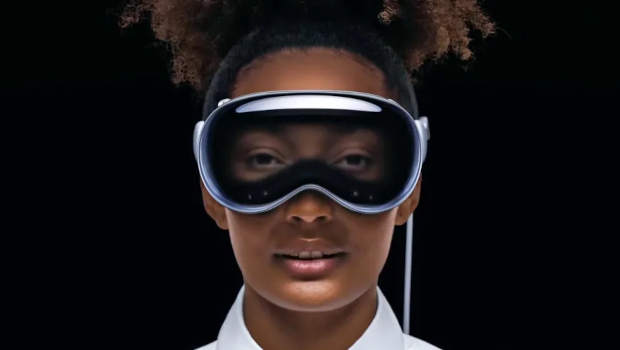
Apple appears set to cancel its Vision Pro ‘spatial computing’ headset. According to a report in MacRumors, the Cupertino computer company has broken up the team responsible for the pricey virtual reality (VR) machine.
Since the report’s publication, writers have been falling over themselves to deny it, presumably either source captured or in thrall to the algorithm demanding more content and rage to fuel the infinite scroll. So what is the truth? We’ll see, but even if Apple gives the product some kind of zombie afterlife, the fact remains that the Vision Pro was a failure, as is all VR.
First the banal but true: the headsets are clunky and the absence of meaningful physical contact with the ‘world’ it presents makes VR an inherently broken experience. Why, then, does the tech industry keep trying to flog this particular dead horse in the face of actual reality? Meta’s so-called ‘metaverse’, for instance, demonstrated Greek tragedy levels of hubris.

Even the endlessly proposed ‘mixed reality’ VR and AR (augmented reality) sunglasses, which remain a fantasy for all manner of technical reasons, are unwanted, and we know this from the widespread rejection of the prototypal Google Glass. I would calculate the amount of money that was destroyed by these caprices, but, in these dangerous times, I don’t want to add integers to the list of commodities of which are running dangerously short.
Material differences
Frankly, this is baby stuff. The thing about people is that we are embodied beings, not spirits or souls floating around in the ether. Unsurprisingly then, few of us want to experience what amounts to hallucinations that rip us and our grounding in the world apart.
My immediate point is rather more modest, though. Apple’s stratospheric rise under outgoing chief executive Tim Cook has rarely been subjected to critical analysis, simply because Cook’s recipe made shareholders comically rich. There were successes, most notably the A and M-Series CPUs, which not only challenge Intel and the rest, but are a strategic declaration of independence. He also, however, presided over an increasingly incoherent user interface that makes a mockery of Apple’s core selling point, a car project that never saw the light of day, and the forward march of a series of minor iterations of the iPhone that no-one cares about.
Cook was at the tiller as Apple transformed itself into a subscription machine, something that tells us a lot. His predecessor, the late Steve Jobs, typically written about in hagiographic form, was a complicated figure and his career, like all careers, was a litany of failure punctuated by moments of success. Consider the Apple III, crippled by his insistence that it not have a fan, the Lisa, which was ridiculously expensive and ended up buried in a desert landfill, and even the original Macintosh, innovative but limited and underpowered. His post-Apple venture, NeXT Computer, developed machines that were remarkably powerful and continue to cast a real shadow even today, but it was a financial disaster.
Jobs was not the master businessman, genius or Great Man of History, we imagine. However, he had taste, and this, at times, found expression in the human. The Macintosh had an impact because, unlike other graphical computing devices, it offered fine typographical control, thus creating a new form of computer-based activity: desktop publishing. Everything else flows from that, not the technology.
The iPhone was an undeniable success, but more and more people are ruing the transformation of the Internet from a tool to a thing we carry in our pockets, so the judgement of history is not quite in on that one.
As for VR, whatever industrial applications may exist, the goofy and disembodied fantasy of consumers ‘jacking-in’ is unrelated to them. It’s just a tool. Nobody lies in bed dreaming about wash plants.
Cook’s Apple was a marketing machine. Share prices ballooned, but that should not obscure the fact that today’s technology executives seem increasingly like an avatar of an industry radically overplaying its hand. It is worth noting that Jobs himself had a major role in this, and while the iPhone appears to have been the fork in the road, his errors also include skeuomorphic design, now replaced by the even worse ‘flat’ design, both of which approach human-computer interaction from equally bad premises.
He also, in a world where a modest calculation suggests several million people write for a living, lumbered us with ‘island’ keyboards that represent nothing so much as the smirking revenge of Clive Sinclair.
It is not at all clear to me that an industry that can no longer build a tool suitable for people can easily change course. After all, introspection is not something technologists typically do well.
Expect more failure. Nobody wants VR, and unlike workplace technologies, we can’t be forced to use it.



 Ltd
Ltd