


A couple of weeks ago, I wrote about a frequently overlooked word that I see in stories and reports concerning technology but barely register because I’ve become almost desensitised to it. That word was “unprepared”.
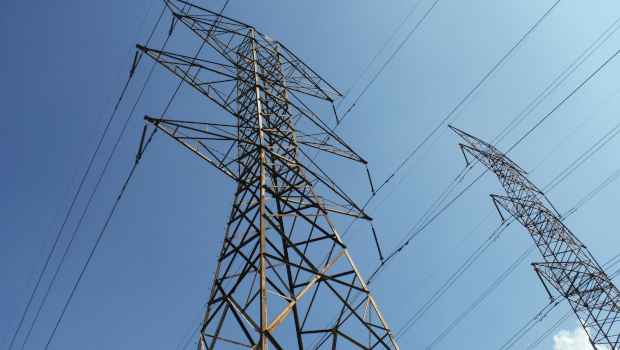
I was reminded of this while reading an article concerning two data centre projects in Santa Clara (which Bloomberg helpfully described as “Nvidia Corp’s hometown”) that are lying vacant because the local utility doesn’t have the capacity to supply them. Bloomberg noted that demand for data centres has never been greater but “access to electricity is emerging as the biggest constraint”.
This was compounded by a separate report in IT Pro concerning analysis from real-estate services company Savills that revealed the expansion of data centres in EMEA was also being affected by access to electricity.

This is a consequence of what we might call the “If you build it, they will come” school of thought which appears to be the founding principle for the current AI mania that dominates every sphere of life today. There was little, if any, forethought to how these data centres would be powered. And there has also been little, if any, thought on the consequences of a massive increase in electricity consumption at a time when the world is struggling in its efforts to mitigate climate change.
The amounts of money being spent on AI are staggering. Gartner recently forecast worldwide spending on AI would hit $1.5 trillion in 2025 and surpass $2 trillion in 2026. Companies such as OpenAI, Meta, Microsoft and Alphabet have all pledged to invest astronomically large sums in building AI data centres.
They are so large that they can appear unbelievable when placed in a different context. For example, Meta expects to spend $600 billion on AI by the end of 2028 which is substantially more than Ireland’s national debt of €155 billion at the end of 2024. For context, it’s also way more than the $100 billion that the US government paid in SNAP benefits to the poorest 42 million Americans last year.
But while we can see the purpose of SNAP, for example, what is the purpose or the good of all the spending on AI? I accept that we can all cite examples of where AI can deliver real benefits but it’s equally likely that we can also end up talking about all the things AI can do which have no appreciable benefit or good at all. And who’s to say that the latter doesn’t outweigh the former.
Which brings me to another word that I think will eventually define the period of the tech era that we find ourselves in today: ‘irresponsible’, although it may well be that ‘reckless’ becomes a more appropriate description.
This is the logical culmination, in many ways, of the way the technology industry has evolved in recent years. Think back to the staid days of IBM, DEC and the like. Most of those companies were businesses serving businesses. They appeared to understand the responsibility they had as suppliers of hardware and software to enterprises and governments because they were businesspeople themselves.
Accountable? Us?
We live in a very different environment today. Much of the modern technology industry is run by what some might term ‘visionaries’ but others might describe as ‘hype merchants’. They have defined themselves as pioneers but, in some respects, they can appear more akin to F. Scott Fitzgerald’s description of the Gatsbys as “careless people…who smashed up things and creatures and then retreated back into their money or their vast carelessness or whatever it was that kept them together, and let other people clean up the mess they had made”.
It’s not surprising that so many tech entrepreneurs live by the motto of ‘Move fast and break things’ given the sheer lack of accountability for their actions, as evidenced, for example, by Elon Musk’s engagement with the Department of Government Efficiency (DOGE). There is no sense of responsibility. The only responsibility they have is to their own insular and narrow perspective on the world. They look at the world through a prism of their own making.
That prism has no room for them to seriously contemplate and plan for the enormous amounts of energy and water that will be required to power the grotesque Ozymandian scale of their AI ambitions. They do not pause to reflect on what damage they may end up inflicting on the world, it does not matter to them. They have no responsibility for what they are doing. Why? Because if it breaks, they’ll just move on to something else or retreat back into their money or, in the case of some of them, to lairs hidden in the mountains, sheltered from the consequences of their actions upon the outside world.
And when AI can’t fix the mess they made, they’ll just sit back and let other people clean it up for them.


 Ltd
Ltd