


Silicon play holds as AI companies wobble
SpaceX, as we are told, is an artificial intelligence (AI) company. No surprises, then, to see its share price dropping. Shares closed on Wednesday below the $150 (approx €131) opening price for the first time. Clearly this is not the AI stock implosion the entire world is somehow both braced for and utterly unable to stop imagining. Or prepare for. It is, however, a sign that some of the froth around AI is fizzling out.
I’d almost be sorry, but I fear an AI collapse even more than I fear the boom.
OpenAI and Anthropic continue to march toward floating on the markets, and, like it or not, SpaceX’s success has only contributed to the mania. That said, there are growing voices of concern: Anthropic’s spat with the US government continues, and OpenAI’s star, once the brightest in the heavens, is starting to dim. Some are simply asking things like ‘have delays in the big hyper listings made the technology’s funding gap worse?’ Then there’s Microsoft’s shares, which have been in the doldrums for some time, while Oracle, also investing heavily in AI, has seen share prices drop back to the mean.

Even stranger ideas are aboard, such as something like industrial policy, or a PR nod toward it anyway: OpenAI boss Sam Altman has proposed giving 5% of the company to the US government, reviving memories of so-called ‘golden shares’ and entities like the National Enterprise This or That. How odd to think, if even for a second, that AI could be the technology to unwind decades’ of fixation on markets and, increasingly, the immaterial.
Chips with everything
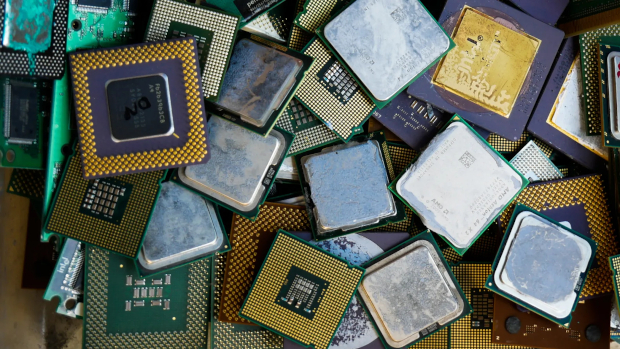
Back in the here and now, though, one sector continues to boom even as AI is stumbling. Oddly, it is one that is, now anyway, utterly dependent on AI: semiconductors.
It is not a secret that Nvidia has been the biggest winner from AI. Someone has to design all those GPUs, after all. But look at the other news: Micron, whose shares have catapulted in recent months, announced yesterday that it plans to invest more than $250 billion (approx. €218 billion) in the US between now and 2035. This is, of course, driven by surging demand for memory chips and the Trump administration’s push to bolster domestic chip production, both of which flow from AI.
It’s a slightly precarious place to be, but there is no question that semiconductors contain an enormous amount of value, spreading it right through the economy from raw material inputs to very real value derived from design and production. Little wonder the industry has become a locus for geopolitics.
Little wonder also, though, that more and more computing companies are diving into custom silicon design, something most people thought was a dream that died in the 1980s. For one thing, Apple, something of an AI laggard, has nonetheless clearly wrung great benefit from custom silicon, and this will not have gone unnoticed. Meta will start using its own home-designed AI chip this year, Reuters has reported. Just today, too, Korean chipmaker SK Hynix floated on the US market, valued at $1 trillion (approx. €876 billion).
Everyone can now hear the demands for AI to start carrying its own weight. For now, the hardware part of the bargain (the thorny issue of infrastructure notwithstanding) is in place. Silicon smashing share price records is not a sign of a government training scheme offering courses in shovel salesmanship to gold miners, but ‘picks and shovels’ became the cliché that it is for a reason.



Subscribers 0
Fans 0
Followers 0
Followers