


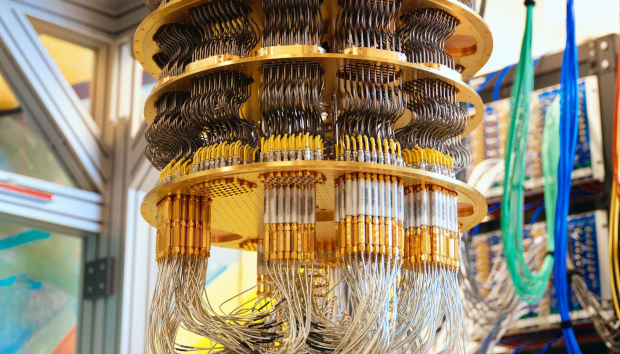
Quantum computing is reaching a commercial turning point, study finds
The year 2026 is on track to mark a turning point for quantum technology, as global investment in related start-ups surged more than tenfold in a single year to a record $12.6 billion in 2025, according to a new report by consultancy McKinsey & Company.
Global revenues of quantum computing companies also broke the $1 billion threshold for the first time, figures from McKinsey’s Quantum Technology Monitor 2026 show.
Quantum computers differ fundamentally from conventional machines. Instead of bits, which are either 0 or 1, they use so-called qubits. Qubits can be not only 0 or 1 but both simultaneously – a property known as superposition.

Qubits can also be linked to one another regardless of the distance between them, a phenomenon known as entanglement. This connection makes quantum computers particularly fast at certain tasks, such as identifying patterns or simulating complex systems.
As a result, they can solve some problems far more quickly than conventional computers – above all in fields such as cryptography, materials research and artificial intelligence.
The report shows that the topic has reached the boardrooms of global business. “2026 is the year in which quantum computing moves from a technology promise to a strategic management question,” said Henning Soller, a partner at McKinsey.
He said the focus was no longer primarily on technical feasibility, but on which companies were now building the capabilities and partnerships needed to secure genuine competitive advantages.
McKinsey’s researchers said they had observed a fundamental shift in the sources of funding. Whereas the sector had long depended on public subsidies, private investors and capital markets had now taken the helm.
While around one third of investment still came from public sources in 2024, that share shrank to just 3% in 2025. Almost half of private investment – 44% – came via capital markets in 2025, including through initial public offerings.
The report also highlights the geopolitical dimension of the technology. While the US dominates in start-up financing, large transactions and the location of market leaders – with 64% of investment flowing into US start-ups – Europe leads in actual corporate adoption of the technology.
Asia, and China in particular, is rapidly catching up in the background: China leads the world in research publications and patent applications in the field of quantum computing, which McKinsey said pointed to strong state-directed efforts to build intellectual property.
For European business, the report’s message is clear: The window for securing a leading position in the quantum economy is closing. Companies that continue to dismiss the technology as a distant prospect risk missing out on the next great industrial revolution.
DPA





Subscribers 0
Fans 0
Followers 0
Followers