



| Hyper-converged | |
| “Mobility will remain a priority in 2015 but many will move beyond simple MDM to more comprehensive Enterprise Mobility Management solutions” | 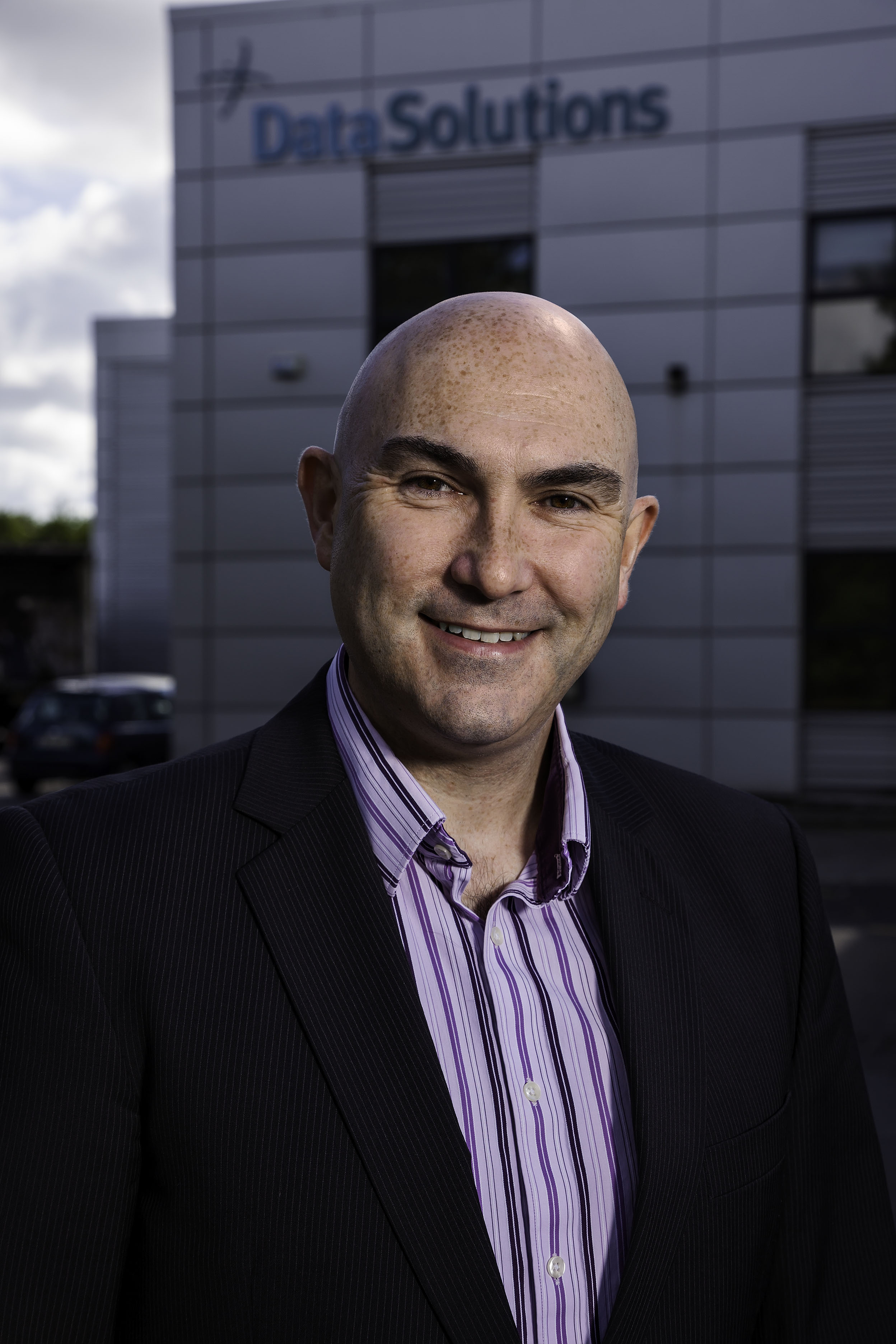 DataSolutions : Francis O’Haire DataSolutions : Francis O’Haire |
| Through 2015 we will see an escalating disruption in the traditional server and storage infrastructure market as legacy server vendors see the writing on the wall for their old-school storage area networks and arrays.Although now touting the virtues of Hyper-Converged, 2015 will see these “me too” vendors scurry to catch up with the visionaries in the hyper-converged space such as Nutanix.
While the Internet of Things may seem like science fiction to many, in 2015 we will see its growing impact on our lives.For instance, Beacon technology from the likes of Aruba Networks will, for example, allow retailers to know when you are passing the fruit aisle and push a timely special offer on bananas to their app on your phone!Mobility will remain a high priority for organisations in 2015 but many will move beyond simple Mobile Device Management to more comprehensive Enterprise Mobility Management solutions such as Citrix XenMobile. Businesses will realise that trying to manage every device is impractical and irrelevant since securely delivering data and applications to any device is what is important.The biggest issue I believe we will face in 2015 is a massive escalation in cybercrime targeting smaller business in order to get to the bigger businesses with which they trade. Small and medium businesses need to take their IT security much more seriously and deploy more than basic firewalls. Next generation firewalls like the Check Point 1100 Appliance deliver enterprise security functions like Intrusion Prevention at a small business price. |
|
| Business-enabling skills | |
| “In order to remain relevant within their organisations IT professionals need to learn new skills to adapt to their changing roles” |  Global Knowledge : Steven Purcell, country manager Global Knowledge : Steven Purcell, country manager |
| New Skills required to integrate IT into the business: Over half of IT decisions are now made outside of the IT department. It is a reality that trends like the consumerisation of IT and cloud are rapidly changing the balance of IT decision-making in organisations of all sizes. In order to remain relevant within their organisations IT professionals need to learn new skills to adapt to their changing roles.
Previously, the main reason to get certified has been to qualify for certain traditional IT support roles and validate your skills. Taking on extra certifications will continue to show you have passion and drive to do well in your career, something that employers will respect and will keep increasingly hard to find IT staff in demand. Outside the normal training courses on technical vendors like Microsoft, Cisco, VMware and Citrix, IT Professionals are increasingly required to be trained on Best practice fields like Project Management methodologies (e.g. PRINCE2), Service Management (e.g. ITIL) and IT Architecture (e.g. TOGAF) in order to increase their attachment and relevance to the business. Furthermore, IT professional increasingly need to improve their “soft skills” like report writing and presentation skills to integrate better with the rest of the organisation. The current trends towards big data, cloud computing, security and video technologies also means IT needs to evolve to become a business “enabler” and business partner. IT teams need to up skill on these technologies and offer to roll them out instead of reacting to requests from elsewhere in the business. |
|
| Point and click crime | |
| “Attackers are moving back to social engineering or focusing on non-Microsoft platforms” |  Sophos : James Lyne, global head of security research Sophos : James Lyne, global head of security research |
| Cyber Security in 2015 and Beyond: As technology becomes ever more embedded in our daily lives, people’s awareness of cyber security is growing, thanks also in part to the increase in high profile breaches and vulnerabilities throughout 2014 (Heartbleed, Target, Sony). At Sophos, we’re constantly watching the threats and evolving our security products to keep one step ahead of the cybercriminals. Here are just a few of the top trends for cybersecurity that Sophos will be tracking in 2015. You can find out more — from the increasing skills gap to mobile payments, encryption, and the growing gap between SCADA systems and the real world — at www.sophos.com/trends-20151.
Cybercriminals have for years feasted on Microsoft Windows. Fortunately, Microsoft has invested in exploit mitigations, making writing attack code more difficult. Some attackers are moving back to social engineering or focusing on non-Microsoft platforms. 2. In 2014 we’ve seen more manufacturers of Internet of Things (IoT) devices failing to implement basic security standards, so attacks are likely to have nasty real world impact. The security industry needs to evolve to deal with these devices. 3. Heartbleed and Shellshock showed that significant pieces of insecure code have been in common use in computer systems today for many years. This has made cybercriminals look at typically less-considered software/systems. 4. The last few years have seen the rise of products and services to make cybercrime point-and-click easy. The popularity of mobile platforms means we’ll soon see more crime packs and tools for mobile. |
|
| Hacking as a service | |
| “We will see a significant advance in cloud based threat intelligence which will help to prevent attacks instead of just detecting them and also provide more insights on what is behind a specific malware to better understand the risks which it exposes” |  Next Gen Group : Lars Meyer, technical director Next Gen Group : Lars Meyer, technical director |
| The threat landscape has changed tremendously over the last couple of years. We are now seeing highly sophisticated attacks executed by novices simply made possible by the new business model of cybercrime “Hacking as a Service”. Instead of taking the risk of attacking themselves, incredibly skilled and intelligent attackers now earn money by developing easy to use tools which enable less skilled criminals to execute sophisticated attacks which easily circumvent the classic enterprise security solutions consisting of a firewall, a proxy and endpoint antivirus.
Next-Generation Firewalls have now become an accepted best practise to fight cybercrime on the network and at the moment there are still differences when it comes to soft- and hardware architecture which has a significant impact to the effectiveness when comparing different vendors. However I believe in the future the key differentiator between vendors will be their capability of identify new malware and delivery protections to theirs customers in minutes rather than days. So my first prediction for 2015 will be that we will see a significant advance in cloud based threat intelligence which will help to prevent attacks instead of just detecting them and also provide more insights on what is behind a specific malware to better understand the risks which it exposes the enterprise to. My second prediction for 2015 will be that advanced endpoint protection solution will get traction in the market as the classical signature based antivirus is de facto dead. Certain malicious activity is easier prevented on the network and a next-generation firewall is the best solution for this job while other malicious activity like especially software exploits can only be detected and stopped at the endpoint and with this the best protection is provided by a combination of a next-generation firewall plus Advanced endpoint protection and a cloud based threat intelligence which turns data into actionable security intelligence. |
|



Subscribers 0
Fans 0
Followers 0
Followers