


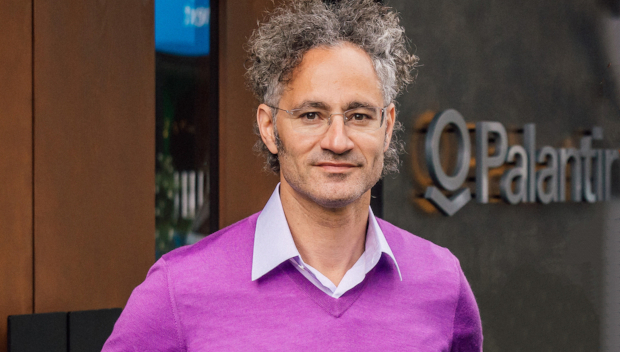
Palantir boss warns AI may worsen income inequality
Alex Karp, CEO of Palantir, has suggested that AI could increase his personal wealth by as much as twenty times, potentially boosting his fortune from $15 billion to almost $300 billion dollars. By contrast, he expects that the average middle-class worker will at most see their salary double over the next 10 years. Karp described this widening gap as a “complete decoupling” between extraordinary wealth and standard incomes, and characterised the situation as a severe social crisis.
The decoupling of wealth
In a conversation with Mathias Döpfner on the MDMeets podcast, Karp argued that although AI can improve the general standard of living, the actual architects of the technology are on the verge of becoming exponentially richer. He attributed this growth in wealth to a small group of highly unconventional intellectuals who have no connection with the average person.
Despite his role in driving Palantir’s valuation up to around $322 billion through demand for AI, Karp admitted that the excessive hype surrounding the technology is both discouraging and disturbing. He even speculated that governments might eventually nationalise AI companies if public anger over the concentration of wealth continues to rise.

This development fits into a broader global trend. According to Oxfam, billionaires’ wealth rose by 16% in 2025 to $18.3 trillion. This increase surpassed previous records. This era of unprecedented wealth accumulation recently reached a new high when Elon Musk briefly attained ‘trillionaire’ status.
Warnings from within the sector
Other influential figures share Karp’s concerns. Larry Fink, CEO of BlackRock, cast doubt on the future of many office jobs. According to him, the current benefits of AI mainly flow to companies that have the necessary data, infrastructure and models.
Fink compared this development to the impact of globalisation, which previously put particular pressure on industrial jobs. Nobel Prize winner Geoffrey Hinton, for his part, argued that it is not the technology itself but the capitalist system that drives companies to deploy AI as a replacement for human labour.
These tensions became particularly clear recently in South Korea, where Samsung employees almost went on strike to demand a fairer distribution of AI-generated profits. The central issue has shifted from whether AI will concentrate wealth to whether legislative measures will be taken before the economic divide becomes permanent.
Business AM




Subscribers 0
Fans 0
Followers 0
Followers