


As more and more enterprise-worthy and refined mobile cloud applications become available, it’s becoming increasingly common to find people using mobile devices as primary access tools. “Technology is going to evolve, get better, faster and more pervasive in this regard and behind that will be connectedness. We see the connectedness beyond the device as being critical,” said Dempsey.
Eighteen months ago Salesforce1, a complete overhaul of the company’s enterprise offering redesigned to make it a mobile cloud platform, was announced. In September 2014 a further development was unveiled: an app builder that allows users to drag and drop to create their own custom apps. Dempsey gives the example of Irish Life which “built an app to allow broker relationship managers to track and record their meetings with brokers – what they discuss at meetings, and what products and services they reference. That was information typically lost in a spreadsheet somewhere internally. But now it’s shared right across the company and it took them just five days to build and deploy that app. That’s a powerful example of how things are evolving.”
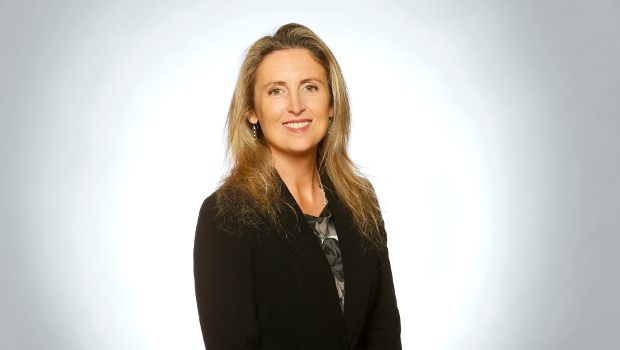
“We develop everything with the user in mind. We don’t want them to have to worry about whether their data is secure – it’s about giving that consumer feel to serious applications,” Grace O’Rourke Veitch, Citrix
Dempsey believes that there has been too much focus from the developer community on siloed mobile apps, with a lack of joined up thinking in terms of how to get the most from mobile. “People are naturally focusing a lot on mobile apps and we’ve seen statistics that say 34% of marketers are going to try to build an app this year, maybe even just as some kind of loyalty tool or a corporate game or whatever. But whether you focus on phones or tablets or wearables, you have to make sure that whatever your use case, it’s all connecting back to one central platform.
“You often see mobile apps that are siloed, where you can do certain things on mobile but the company knows so much about you as a customer, employee or a partner and the app doesn’t reflect that. That’s what we’re trying to do, whatever the use case our apps should ultimately go back to one central cloud, so that it’s all connected together.”
Device categories
Meanwhile, other operators in the mobile cloud space are finding similar trends. Microsoft, in particular, has made a point of trying to make its Windows operating system platform independent. With the launch of Windows 10, it’s seeking to further consolidate its’ mobile-first, cloud-first mantra.
“We’re finding that businesses are continuing to use Windows devices as their core devices to get work done, and as the two-in-one mobile device category matures, we are seeing an increasing number of customers choose a device that can be both tablet and PC,” said Art Coughlan, business group lead for cloud and enterprise with Microsoft Ireland. “Other users choose a companion tablet to work with a desktop, and so we see tablets used in specific business scenarios where they just fit. Either way, both mobility and cloud are central to our offerings for both businesses and consumers.”
Microsoft has a range of mobile cloud offerings aimed at different kinds of users, from entry level applications such as OneDrive and Skype to mid-level like Office available across platforms including Windows, iOS and Android. For enterprise class customers, it has cloud services such as Azure Active Directory and InTune that allow businesses to control fleets of devices, the applications they run and the user’s access to corporate data.
“In Ireland, we have turned a corner in terms of businesses trusting the cloud and as a result we have seen increasing demand for new ways to deliver IT services to mobile devices,” said Coughlan. “New offerings such as Azure Remote App greatly simplify the process of securely delivering applications to users across devices and we are seeing a continued need to address security and control risks. We have vast experience in helping our customers manage and secure traditional desktops and so we think we are best placed to bring this expertise to a mobile and cloud-driven world.”



Subscribers 0
Fans 0
Followers 0
Followers