


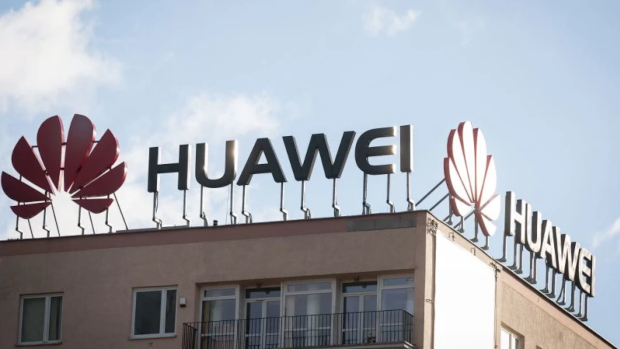
Huawei, one of China’s leading technology companies, recently announced its ambitious plans for chip manufacturing and the development of computing power. Breaking years of silence, Huawei unveiled its roadmap for four new generations of Ascend AI chips over the next three years. The move reflects Huawei’s desire to compete with industry giants such as Nvidia in the artificial intelligence market.
Huawei has played a key role in China’s efforts to create a domestic semiconductor industry, aiming to reduce dependence on the US-dominated supply chain. After the release of the Ascend 910C earlier this year, vice president Eric Xu gave a detailed description of the company’s future chip releases: two variants of the Ascend 950 next year, followed by the 960 in 2027 and the 970 in 2028.
Xu emphasised the importance of computing power for artificial intelligence, particularly for the development of AI in China. He revealed that the Ascend 950 chip will use Huawei’s own high-bandwidth memory, overcoming a major technological hurdle that China has faced for years due to its reliance on South Korean and American suppliers.

In addition, Huawei announced the development of new computing supernodes, called Atlas 950 and Atlas 960. Xu claimed that these supernodes are the most powerful in the world and can support 8,192 and 15,488 Ascend chips, respectively. These models succeed the Atlas 900, also known as the CloudMatrix 384, which uses 384 of Huawei’s latest 910C chips.
According to research group SemiAnalysis, the system outperforms Nvidia’s GB200 NVL72 in some performance metrics. The GB200 NVL72 uses 72 B200 chips, and Huawei attributes the superior performance of its system to its ‘supernode’ architecture, which enables high-speed chip interconnections.
Business AM




 Ltd
Ltd