



In association with BeSecure Online
Your biggest client just received an e-mail from you that you never sent. It looked like you. It came from your domain. Somewhere between your outbox and their inbox, criminals were lurking.
Such incidents quickly undermine years of trust. When a client receives a fraudulent e-mail from your domain, they question your credibility and the security of your business. In a competitive market, lost trust leads to lost business.

The impact extends beyond reputation. Fraudulent e-mails from your domain redirect payments, intercept sales forecasts, and defraud your most trusted clients. It is an IT failure that leads to lost sales, lost marketing opportunities, and financial risks.
What does DMARC do for e-mail security?
DMARC addresses these risks by controlling who can send e-mail on behalf of your domain, preventing impersonation, and ensuring your messages remain secure in transit. With proper implementation, fraudulent e-mails do not reach your clients. Now your e-mails fly first class, not coach, reaching their intended recipients.
For any organisation that values its brand, clients, and reputation, DMARC is essential. It is a critical business control, not merely a technical detail.
SPF, DKIM, and DMARC are not optional; they are used to verify the authenticity of your e-mails and prevent criminals from sending messages that appear to come from your business.
Current state of DMARC: Ireland and the UK
DMARC adoption is increasing rapidly among UK and Irish organisations, with enforcement now serving as the key benchmark. Approximately 55% to 60% of major Irish and Northern Irish domains, including government and large enterprises, have published DMARC records, though only about 30% are fully enforced.
In 2026, organisations are prioritising DMARC due to several key factors:
- Sender, marketing and security requirements
- Cyber risk pressure, sender reputation, especially around cyber insurance renewals
- NIS2 puts a sharper focus on spoofing and impersonation, leading to better domain health
DMARC drives e-mail security by verifying e-mail authenticity and stopping impersonation attacks before they reach the inbox. Your e-mails 100% delivered, read as sent.
Real life examples
An Irish example is Logix Aero Ireland v Siam Aero Repair Company. This case involved sophisticated e-mail fraud during the €825,000 purchase of two aircraft engines, in which fraudsters used fake or similar e-mail domains to divert payments from the legitimate seller in Vietnam. The Irish company was unsuccessful in its legal action to recover the engines.
The key lesson is clear: Without robust controls, criminals can infiltrate business e-mail systems, alter payment information, impersonate trusted contacts, and change banking or invoicing details, potentially delivering a fatal blow to your organisation’s financial health and reputation.

In 2018, during the transfer of Stefan de Krij from Dutch club Feyenoord to Italian Serie A club Lazio, €2 million went missing. Criminals, posing as Feyenoord, provided false bank details for the final payment of the €8.5 million transfer. This impersonation is known as a ‘man in the middle attack’ silently lurking in your e-mail. The deal ended acrimoniously, with Lazio reluctantly paying an extra €1 million as a courtesy. DMARC enforcement prevents this.
Every domain, just like a football team, needs a keeper. Check your domain here.
Total e-mail security
This is why organisations need total e-mail security, not partial protection. SPF helps define which servers send on behalf of your domain, DKIM verifies that messages are authentic, and DMARC tells receiving systems what to do when those checks fail. Together, they help stop direct domain spoofing and give businesses visibility into who is trying to send e-mail using their name.
Businesses need strong process controls. Bank details should be verified through a secondary trusted channel; sensitive requests should not rely solely on e-mail; and finance teams should be trained to recognise urgency and secrecy as potential warning signs rather than indicators of authority.
BIMI: Making your e-mails fly first class
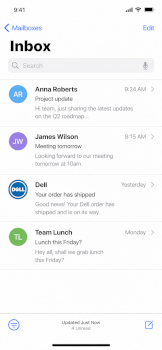
BIMI, or Brand Indicators for Message Identification, is a business benefit of full DMARC enforcement, as it makes e-mail security visible to customers. When a message passes DMARC checks, BIMI displays a verified brand logo in supported inboxes, helping recipients instantly identify legitimate e-mails and making impersonation more difficult.
This is important for both security and marketing. BIMI supports e-mail verification, enhances brand trust in the inbox, and helps genuine messages stand out, which is why marketing, sales and finance teams recognise the value of DMARC delivering their e-mails as sent.
When customers can easily verify an e-mail’s authenticity, they are more likely to trust it, read it, and engage with it. Industry reports associate BIMI with increased consumer confidence, stronger brand recall, and higher open rates. Verified studies indicate that BIMI-branded e-mails are 23% more likely to be read on receipt. Forbes has cited a Harvard study stating that this alone can lead to a 3% increase in sales.
DMARC protects the domain. BIMI helps the brand benefit from that protection in the inbox.
Fake e-mail. Real damage. Lost client. Lost revenue. DMARC stops the threat. BIMI builds trust. Find out how well protected your business really is. Check your DMARC status here.
Finally
If your largest client receives an e-mail that you did not send, it is not only an IT issue. It is a brand, trust, and potential fraud issue. The solution is to secure e-mail with SPF, DKIM, and DMARC, implement robust payment verification, and develop a clear strategy to prevent spoofing, invoice fraud, and executive impersonation before another fraudulent e-mail occurs.





 Ltd
Ltd