


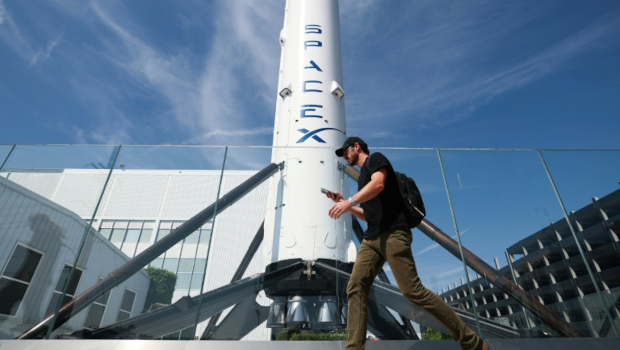
AI IPOs blast off with SpaceX as tech jobs rout continues
Markets drifted upwards last night in expectation of the floatation of rocket and artificial intelligence (AI) company SpaceX.
The Elon Musk venture will debut its shares today, with trading beginning on Wall Street after raising $75 billion (approx. €65 billion) through its initial public offering (IPO), including having successfully sold 555,555,555 shares of its Class A common stock at $135 (approx. €116.71) per share.
The listing will put SpaceX among the largest public companies globally, and could see Musk declared the world’s first trillionaire later today.

Markets in general seem to have been buoyed by the offering: Japan’s Nikkei index rose by 2.8%, while Europe’s Stoxx 600 index of Europe’s 600 most valuable publicly-traded companies opened up almost 2%.
At the time of writing, US markets are closed and pre-market trading has not yet begun.
What will happen in the coming days, months and years is far from clear. The market could go down on open, though derivatives trading on SpaceX suggests it will at least hold its price and probably rise. For now, anyway. Indeed, the overall mood in the markets is ambivalent, with both excitement and jitters on display in equal measure.
All of this tells us very little about the economy, however.
Happily, S&P Global Ratings has announced it will not fast track SpaceX’s listing into its index of the top 500 shares in the US. Consequently, at least index funds tracking the S&P 500 will not be forced to buy into this unprofitable company. Alas, the same cannot be said of Nasdaq, which will allow SpaceX to join its 100 company index in 15 days. Then again, anyone planning their retirement on the Nasdaq-100 index clearly has an interesting relationship to risk.
More broadly, whatever happens today, there is no question that the market is in a bubble. What this means for investors, though, is hard to say: after all, as the saying goes: the market can stay irrational longer than you can stay solvent.
SpaceX is riding high, of course, thanks to the specific bubble around AI and future flotations, notably OpenAI and Anthropic, will test the market’s ability to value these companies and the technology that they promise will change everything. Even if the technology pans out (and it is far from clear what that would even look like), there is no guarantee that any of the pioneering companies will be among the winners.
Indeed, researchers Forrester, noting that the “company that defines a category is often the one most painfully displaced by it”, warned OpenAI, on which it it generally positive, could be beaten by new entrants, potentially becoming “AI’s BlackBerry FIFO (‘first in, first out’)”.
Even assuming valuations of SpaceX, Anthropic and OpenAI do, along with other AI-boosted shares from the likes of Microsoft, Google, Oracle and of course, Nvidia, hold up, there is then the question of the concentration of massive economic and technological power in a few hands. No small matter.
For tech workers, though, some worry, not only about the impact of AI but also a rather apparent change in approach to recruitment and staffing, is warranted. Slippery AI adoption statistics are one thing, not to mention the matter of whether any value is being created. One statistical measure is pointing very clearly in one direction, though: the tech industry is cutting jobs.
Tech Layoff Tracker claims almost 152,000 people have lost their jobs in 2026. Meanwhile in Ireland, the Central Statistics Office’s Labour Force Survey, published late last month, found that tech employment has fallen by 20,300 over the past year. This amounts to a drop of 10.7% in just 12 months.
Whether this trend is really happening on foot of AI or if that is just an excuse, we don’t yet know. Nor do we know if tech companies can meaningfully use AI to really replace workers rather than to hit zombie targets. For my money, it seems likely AI is, indeed, the proximate cause of the layoffs, but what is significantly less clear to me is whether or not this round of ‘rationalisations’ will harm companies’ ability to do their work - or if the wheels can even be kept on the bandwagon at all in the longer term.
What can be observed, though, is that, while tech workers have not exactly been transformed into peasants, the days of their gilded existence seem to be coming to an end at precisely the same moment the industry has found another way to shake the magic money tree.




Subscribers 0
Fans 0
Followers 0
Followers