



That point about a mix of services was echoed by Gary Keogh, sales director of giant data centre company Digital Realty, which now has four facilities in Dublin totalling over 18,500 square metres (200,000 sq. ft.) “We see a growing cloud ecosystem that organisations are taking advantage of in many different ways. Our role is to enable that and to facilitate our customers and their customers in making choices in the cloud marketplace and then enjoying the benefits of their chosen services to the highest quality levels.
“In part that is possible because so many cloud providers and related managed services are actually operating in our data centres, globally or in Ireland, UK and France for the EU market. So all of the network and connectivity technology that underpins cloud is directly on tap and guaranteed to a higher degree, together with the security pedigree of one of the world’s leading data centre operators.”

Clients today they get very nervous unless we can talk hybrid. That is across both public and private sectors. They are telling us that they have key line of business applications, maybe old maybe new, that are going to be part of their mix for the foreseeable future. They are simply not about to put them up into public cloud, Aidan Rowsome, Unity
Geographical sensitivities
Depending on the workloads that organisations are using cloud for, geographical sensitivities are increasingly common in regard to EU and other regulatory provisions, Keogh pointed out. “Even public cloud is no longer necessarily always global and most organisations want to be aware of where their data might ever be — or indeed actually specify that as part of the contract. We are seeing that as a growing trend and perhaps especially with hybrid cloud because it is so often linked to applications and data that cannot be put at risk such as client IP or personal information.”
No discussion of cloud computing can bypass VMware, certainly the leading vendor of virtualisation technologies and more recently cloud solutions. Its chief technologist for vCloud Air is Richard Munro who began by recalling that the traditional IT focus in organisations has been on availability. “Because our on-premise technology was so complex and went through many generations of development, it is only recently that we have arrived at a culture of service delivery for the requirements of individual workers and the corporate objectives. In fact I think business leaders have understood the idea of IT as a service for a long time while many senior IT people are still trying to grasp it.”
IT as a service
“The rise of the public cloud proved that you could deliver IT as a service capability for the consumer and it has been very successful. Cloud consumption is a fundamental positive for IT. Think of the tens of thousands of disruptive start-ups who have immediate access to IT capability and then have lots of ideas about what to do with it. But within the organisation, slow response from the IT department led line of business people down the shadow IT path by going to external providers who could give them what they wanted or something like it from the cloud. The problem, of course, is that the essential other characteristics of availability like security and governance and so on are just not possible.”
So why hybrid, Munro asked? “It’s not as if any vendor ever came up with it! But public cloud has not remotely met the early forecasts of adoption because you just have to look at it to come up with a long list of challenges. To me, that’s really just about two business quality measures—time to market and availability. Users and businesses not unnaturally said ‘Why can’t we have both?’ and hybrid is an increasingly effective and mature way of combining the service benefits. You have both sets of capability but under the same management stack, which is the critical bit from the corporate point of view.” He instanced ‘compatibility by default’ as an essential characteristic of hybrid cloud: “You can just copy workloads into and out of the cloud with no O/S upgrading or other bits of technology path smoothing.”
Interim phase
Amazon Web Services is of course the colossus of public cloud providers and in fact a complete ecosystem of ancillary and related service models. So it was refreshing to have its UK technology evangelist Ian Massingham concede to TechPro that few if any organisations could move everything to public cloud in one hit. “For large organisations and older ones, it is just too complex with potentially thousands of different applications. The rise of the hybrid delivery model is really a transient or interim phase while those organisations evaluate and decide what they are going to do over the longer term.”
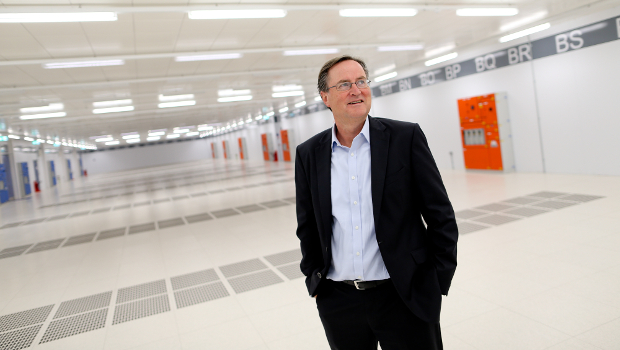
Even public cloud is no longer necessarily always global and most organisations want to be aware of where their data might ever be — or specify that as part of the contract. We are seeing that as a growing trend and perhaps especially with hybrid cloud because it is so often linked to applications and data that cannot be put at risk, Gary Keogh, Digital Realty
The main challenge of these so-called hybrid architectures,” Massingham said, “is that you still have many of the drawbacks of traditional IT even if you think you are operating a form of cloud. It is very constrained and you also have to plan and invest in the capacity, you have to maintain it and still you are going to have a limited set of features in that platform. The simple trouble with hybrid cloud is that it does not deliver the same benefits as for example Amazon public cloud. You’ll get a sub-set of those benefits from your private infrastructure but with those inherent drawbacks from traditional IT.”
The Amazon perspective is straightforward, according to Massingham: the roadmap is leading directly to total cloud computing, even if for now many organisations simply cannot yet accomplish the complete transition. “You end up with this phased migration approach which is what we call hybrid cloud.”




Subscribers 0
Fans 0
Followers 0
Followers