


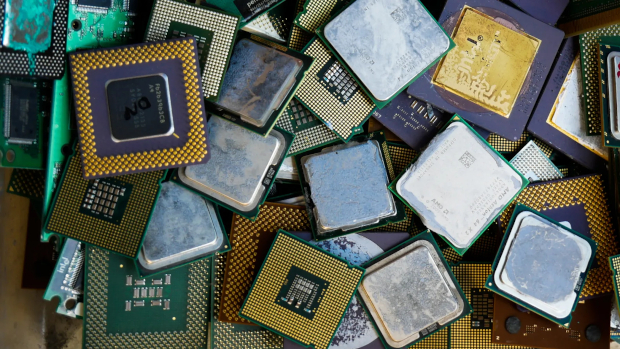
War in Iran disrupts chip supplies to Europe
The war in Iran has significantly disrupted air cargo routes, affecting European companies dependent on imports of semiconductors from Asia. Cargo planes previously used airspace over the Middle East for transit and refuelling, but the conflict has made these routes unreliable, industry sources told CNBC. This disruption caused a 9% drop in global air cargo capacity, according to data from DSV, a logistics company.
As a result, European companies importing semiconductors are facing rising delivery costs and delays. Some manufacturers are even reducing chip imports due to limited capacity. Semiconductors are essential components in various electronic equipment, from industrial equipment and data centres to cars.
Industry experts expect inventory levels to fall as companies try to normalise logistics costs. European car manufacturers, which rely heavily on semiconductors for the electronic systems in their vehicles, are among those affected. While some companies are absorbing increased air freight costs, others are using spare stocks, hoping prices will stabilise in the coming months.

The conflict’s impact on infrastructure, including airports in the Middle East, has significantly reduced global air cargo capacity. Cargo planes flying from Asia to Europe now often take longer, direct routes, allowing them to carry less cargo due to increased fuel requirements. The cost of aviation fuel has skyrocketed along with rising oil prices, further increasing shipping costs.
While companies importing high-value products, such as advanced chips and engineering equipment, are absorbing these cost increases, those dealing with lower-value goods may be relying more on existing inventories in anticipation of possible price drops in air freight.
The disruptions have led to delivery delays for some European chip makers, car makers and contract manufacturers. Fortunately, many companies have stock buffers ranging from a week to several months, thanks to lessons learned during the Covid-induced chip shortage. This foresight has enabled them to mitigate the immediate impact of the current crisis.
Despite the challenges, companies are actively monitoring their supply chains and exploring alternative routes. They are also reviewing supplier exposure and rebalancing inventories in real time to adapt to the changing situation.
Business AM


Subscribers 0
Fans 0
Followers 0
Followers