


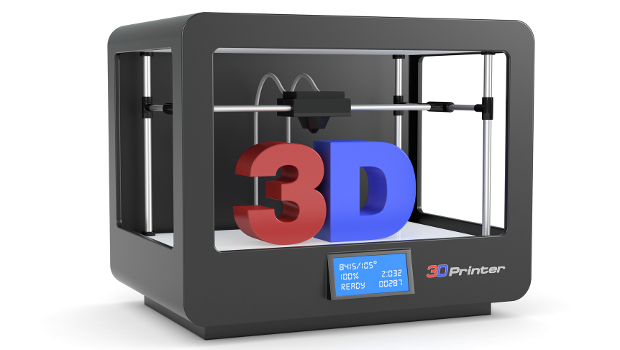
Gartner predicted that by next year, at least one major western manufacturer will claim to have had intellectual property stolen for a mainstream product by thieves using 3D printers who will likely reside in those same western markets rather than in Asia. Importantly, 3D printers do not have to produce a finished good in order to enable IP theft. The ability to make a wax mould from a scanned object, for instance, can enable the thief to produce large quantities of items that exactly replicate the original.
Stalled march
For now however, the 3D printing revolution has stalled as desktop 3D printers are not yet at the point where they can be used for enterprise-style applications. This has given rise to walk-in 3D print agencies, including some in Ireland.

While 3D printed guns have generated most of the media attention around 3D printing, the business world is more concerned about potential losses as a result of intellectual property theft. A 2013 report published by Gartner predicted that by 2018, 3D printing will result in a global loss of at least $100 billion per year due intellectual property theft. (Image: ATF)
Hackett in Dublin is a traditional 2D print specialist which started offering 3D printing seven years ago. Today, it has a specialist 3D operation, Hackett 3D, and according to sales executive Wesley Deverell, interest in the technology is growing steadily.
“When we first started doing 3D in in 2006, we found that the technology wasn’t really up to speed with what people expected of it,” he said. “Last summer we invested in a 3D Systems Projet 660 Pro, which can do large scale colour 3D prints which are up to about a shoebox in size. Printed objects can be combined to create larger finished objects, but that’s a good size for most uses.”
Hackett expected demand for its 3D print bureau to come from the AEC community — architects, engineers and contractors — but found that many of the users are product designers and engineers who want their own design prototypes to be printed out, so they can see their models in real life.
“For 3D printing you need a 3D file, and there are a lot more people using that kind of software now than used to be the case. It’s frequently only a matter of pressing ‘print’ to have a model in your hands,” said Deverell, who described the technology used to produce the prints as “extremely stable”.
It has been on-site and working continuously since July 2013 and has required no maintenance, other than its own automatic cleaning cycle. This bodes well for how private and corporate owners of 3D technology might find themselves managing such technology.




Subscribers 0
Fans 0
Followers 0
Followers