


The EU wants to fight disinformation. We should ask why some people prefer it
I was recently informed about a new EU initiative to fight dis- and misinformation. Very interesting, I thought. I can work with this, especially given growing concern about social media, malign use of artificial intelligence (AI) to fill the world with ‘alternative facts’ and, more broadly, a growing recognition that information technology is, like all technologies, may be inert but it is not ethically neutral in its use.
Unfortunately, the press release struggled to provide a sentence that I could recognise as language.
In short, and I am sorry to report that making sense of this took rather more labour than it should have, the EU has created what it calls the Centre for Democratic Resilience, intended to counter disinformation from hostile countries.

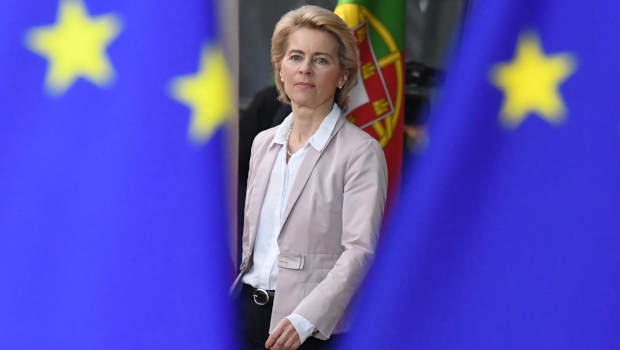
European Commission president Ursula von der Leyen, says that the centre will “level up” the EU’s capacity to “counter foreign information manipulation and disinformation”.
“This will strengthen our resilience, ensure Europe’s public debate remains open and fair, and empower citizens to participate in democratic life,” she said in a statement to the press.
Fair enough, but, first of all, it is time to take terms like ‘level up’ and send them back to the world of computer games where they belong. This is not a trivial point: in the face of a misinformation onslaught, precise and accurate communication that takes people’s intelligence seriously is needed more than ever.
Secondly, what, precisely, will this centre actually do?
Listening to music while walking (huffily refusing to pay for Spotify and hypocritically still using it), I am often subjected to EU anti-disinformation advertisements and simply cannot fathom what the point of them is. Even if I am perturbed by the nonsense spread on the Internet – and I am – I have no intention of visiting anyone’s state-sponsored counter propaganda website, and I hardly think I am alone in that.
Technology, whether we mean the bare metal of silicon, servers and subsea cables or the fluffier variety that is social media, is inherently political simply because real things are at stake. Election interference, propaganda designed to confuse and muddy the waters of discourse, and partial information designed to effect certain outcomes are all real issues in society today, and while none of them are new, there is no question that information technology has not only deepened and broadened their impact but also vastly increased the capacity for their production and spread.
Technicalities
What to do? Countering it with use of technology may be helpful because technical problems have, by definition, technical solutions. However, it is not the answer in full, because human questions cannot be answered by technical means. Of course, this is not news and could be dismissed as a standard issue gripe about a decline in public culture. In other words, true, but so what?
Frankly, even saying things like “technology isn’t enough, we also need media literacy” is a dodge, as media literacy cannot be seriously taught without the provision of the foundational knowledge, both implicit and explicit, that allows us to operate in our lives, our jobs and in this world which we inhabit.
The question that needs some attention is what do to do when significant numbers of people prefer the disinformation. Not because they’re deceived, but because it confirms what they already believe or, crucially, want to believe. The Centre can detect manipulation, label it, remove it, fine the platforms. It cannot make people want to know what’s true. That’s not a technical problem, it’s a political and cultural one, and, through no fault of its own, no EU outfit will be able to address it.
In a statement in the same press release Michael McGrath, commissioner for democracy, justice, the rule of law and consumer protection hits on something important. “There is immense strength and wisdom across our Union,” he said. The European Centre for Democratic Resilience transforms these individual strengths into collective resilience. It helps us connect the dots, uniting governments and societies alike to safeguard our democracies and shape a future grounded in our values and fundamental rights – particularly the freedom to vote and freedom of expression.”
He is not wrong. As a working journalist, though, I can tell you that, without a shadow of a doubt, that that is not how humans speak – and that matters. If we want truth to prevail then getting rid of PR-massaged jargon is the first step. If it is not intended to be read, why write it?
McGrath is not to blame here. Indeed, he wrote an opinion piece in the Irish Examiner that stated the case with some elegance, starting with an anecdote, broadening out to reveal the bigger picture, going into some detail on the centre’s planned work, and finally landing on why it matters. He clearly knows how to make the argument. The Centre should take note.
Faced with digital distribution of lies, the case for democratic resilience will need to be digital, too, but it deserves to be made in language resilient enough to be understood.




Subscribers 0
Fans 0
Followers 0
Followers