


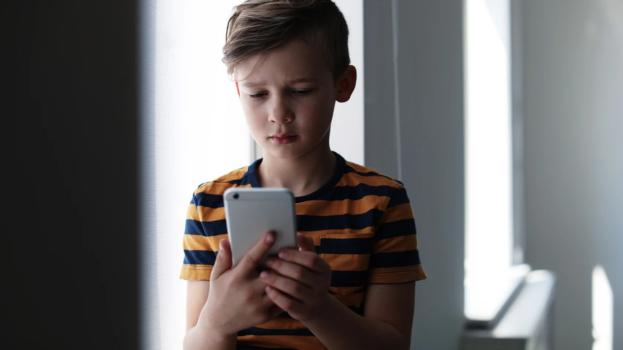
School smartphone bans are a rational response to reality
Had smartphones existed when I was at school, a ban on their use would have felt like an outrage. Happily, they did not exist, so the most advanced technology I ever carted around with me was a scientific calculator.
At the time, my computer use was restricted to the Macs in the computer room, and, at home, the Amstrad and then Atari ST I had been given. In truth, owning a computer was an invaluable experience, and I learned a lot about how computers work and what can be done with them. I also played games, of course. It also got me started on the road to becoming a journalist, so it wasn’t all good…
However, this was all prior to the Internet age, at least for the general public. In addition, as my family was not a full member of the telephone class (do you remember phone dialling locks?), the chance of me ever getting my mitts on a modem were slim. No Microlink or Prestel for me, then. Today, children are using not only computers and other related devices at an earlier age than ever, they are doing so in the context of pervasive online communications and, of course, social media. Little wonder, then, that parents are starting to worry.

A voluntary local “ban” on primary school children in Greystones, County Wicklow, being given access to smartphones is interesting, but will require parents to hold the line against nagging kids demanding a new toy. In an attempt to address this potential pitfall, it was announced this week that schools in County Waterford are making a universal request that kids remain offline until they are older.
These and similar moves elsewhere follow growing concern that social media may be a health risk to children. Certainly, many cognitive scientists have argued that it is designed for addiction.
Of course, not everyone agrees: a recent study published by researchers at the Oxford Internet Institute (part of the University of Oxford), found that Facebook could not be not be linked to psychological harm.
One of the study’s authors, Professor Andrew Przybylski, told the BBC that: “It’s commonly thought that this [social media] is a bad thing for wellbeing. And the data that we put together, and the data that we analysed didn’t show that that was the case”.
The BBC also reported that previous Oxford Internet Institute work carried out by Prof Przybylski also found little association between teenagers’ technology use and mental health problems.
The institute’s results should be welcomed, as the use and abuse of technology demands careful and sceptical analysis, not to mention debate, rather than moral panics. However, anecdotally, we all know that the endless scroll is a time sink and mood depressant.
There is one fairly damning piece of evidence, too: as far back as 2011, it was reported that technology executives were leery of allowing their kids to spend all day gawping at screens, causing a trend of sending them to tech-free schools.
Information technology is important, of course, and kids deserve to have an education that includes it, especially foundational concepts in computing that are often skimmed over in the race to train people up on spreadsheets and word processors – or even simply using tablets to replace textbooks. An introduction to computers should really start with binary and work up from there.
This really is worth thinking about. Technology has an important role to play in education, but I worry that arming kids with tablets not only places an unnecessary financial burden on parents, but it also misses the point of education.
When Nicholas Negroponte and co. unveiled the One Laptop Per Child (OLPC) scheme in 2005 they produced an interesting computer that certainly had some potential to help even out the technological deficit caused by the yawning economic chasm between rich and poor countries. However, really taking the OLPC ‘$99 laptop’ seriously also required buying into the educational theory of constructionism, which claims that active participation is the best form of learning.
This may be true, and I am in no position to argue otherwise. But the greatest educational technology ever devised by humans is the book.


Subscribers 0
Fans 0
Followers 0
Followers