


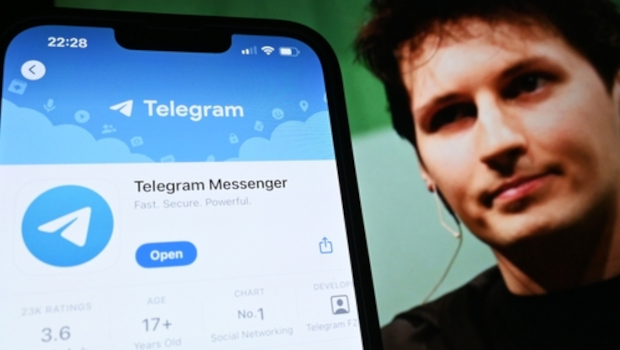
The Russian authorities have opened a criminal investigation into Pavel Durov (pictured), the founder of the messaging app Telegram. The case stems from allegations that Telegram supports terrorist activities, an accusation levelled by the Russian Federal Security Service.
Durov, who lives outside Russia, condemned the investigation as an attempt to suppress fundamental rights such as privacy and freedom of expression. He described the situation on social media as a reflection of a government that is afraid of its own citizens.
Earlier this month, Moscow announced plans to slow down Telegram traffic within Russia due to alleged violations. This move is seen as part of a broader attempt by the Kremlin to steer millions of Russian users towards Max, a state-controlled messaging app. This strategy is in line with the Kremlin’s vision of creating a “sovereign internet” – an online space strictly controlled by the government.
Kremlin spokesperson Dmitry Peskov stated that the authorities had identified material on Telegram that could pose a threat to Russia. He cited numerous violations and Telegram’s lack of cooperation with the Russian authorities as justification for the measures taken. Rossiyskaya Gazeta, a state-controlled newspaper, claimed that since the start of the war Telegram has been used in various Ukrainian plots against Russian military personnel and in thousands of violent incidents.
Despite this pressure, Moscow has refrained from imposing a complete ban on Telegram because of its popularity among citizens and officials, including its role as an essential means of communication at the front.
Russian officials have hinted that Telegram will be allowed to continue operating if it complies with Russian legislation. Human rights activists argue, however, that this would mean Telegram having to grant access to private conversations and remove opposition channels.
Durov, a staunch advocate of online freedom, has a complex relationship with the Kremlin. After being pressured by the authorities into selling his first company VK in 2014, he moved to Dubai and founded Telegram. He holds both Emirati and French nationality.
In 2018, the Russian authorities tried to block Telegram, but failed. An uneasy truce appeared to have emerged between Durov and the Kremlin. However, due to Moscow’s renewed crackdown on independent media and online platforms, Telegram has once again come under scrutiny.
Separately, Russia has blocked access to popular Western platforms such as WhatsApp, Facebook and YouTube, leading to a sharp increase in the use of VPNs among Russian internet users.
Durov himself has come under scrutiny from Western authorities, who have criticised what they see as Telegram’s lax moderation policy. In August last year, he was detained for three days in France as part of an investigation into crimes allegedly committed via Telegram, including the distribution of child sexual abuse material, drug trafficking and fraudulent transactions.
Business AM



 Ltd
Ltd