


Some years ago a friend of mine said he thought policy decisions required expertise, suggesting that any Health Minister should be a doctor. I instinctively recoiled.
“The thing is,” I argued, “that doctors are an interest group. They’re not the only people involved in healthcare. You have nurses, radiographers and all manner of other people, and then you have, you know, patients.”
Warming to the theme, I extended my point that governments also made healthcare policy decisions based on factors other than patient outcomes. Those matter, very, very much, but there are also questions of budget, legality and accountability to the public.

No prizes for making friends and influencing people that day.
Politicians are non-experts, and that’s fine. In fact, it would be better if they were drawn from a wider range of occupations. The old saying that we need experts ‘on tap, not on top’ seems about right to me.
As Bertrand Russell put it, we should be sceptical toward experts, but also recognise when they speak as one. Sometimes we should doubt them, sometimes we should be persuaded by the weight of opinion, and sometimes we should reserve judgement.
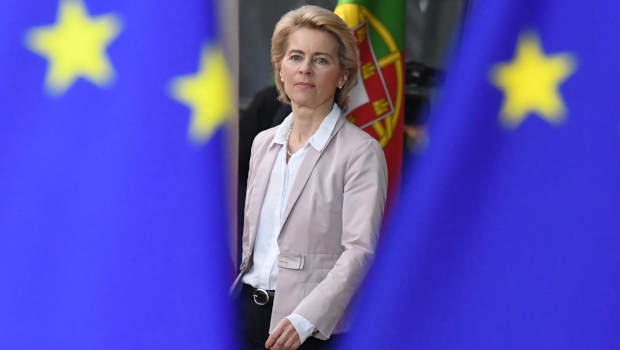
Which brings me to EU Commission President Ursula von der Leyen, who recently waded knee-deep into the swamp of opining on the intersection of information technology, private profit and public good.
Yes, she spoke about artificial intelligence.
Giving a budget speech last week, Von der Leyen said AI will reach human-levels of reasoning in 2026. Well, that’s certainly… an opinion.
I don’t expect politicians to really understand computation or, indeed, logic in the philosophical sense. I wish more people did, but I also wish more people were taught philosophy, were exposed to art, and would stop sending me text messages. Warning bells are ringing, though, and they should be. Superintelligent AI? Really? Besides, this is not rocket science. Nor is it even data science, for that matter.
The Irish Council for Civil Liberties (ICCL) responded with an open letter saying that Von der Leyen’s reading of the tea leaves drew not on unbiased points of view but rather on the giddiness of Anthropic CEO Dario Amodei, Nvidia CEO Jensen Huang, and CEO of OpenAI Sam Altman.
The ICCL’s Dr Kris Shrishak, one of the signatories of the letter, said citizens already face AI harms including “discrimination, privacy-violations, psychological and environmental harms”.
He continued: “Leaders of EU institutions have a responsibility to citizens. By promoting AI hype in the midst of a dangerous bubble, the European Commission risks proposing harmful policies, wasting public funds and being complicit in AI harms.”
That sounds about right to me, too. If you want to make yourself feel ill have a read about the antics of the Dutch administration. Or the British government cutting the benefits of people who fly from Belfast and return via Dublin.
Politicians would do well to remember that what industry figures tell them is not the truth. It may be true, it may not. What it certainly is, however, is partial and intended to extract maximum advantage.
I’ll just add one more thing: aggregate data is not the thing, it is an epiphenomenon of the thing, and if you don’t know what that means, you probably should slow down before prognosticating about the future of cognition.




 Ltd
Ltd