


 I have to admit that this makes IT sound interesting. In fact, it could make IT sound even more than interesting, possibly taking it up to the level of exciting. Or maybe not.
What am I talking about? A fair question and one I’m often asked. In this instance, it’s a concept called ‘composable infrastructure’. It’s in the headlines this week because HP highlighted it on the second day of its HP Discover conference in Las Vegas, when it launched the HP Composable Infrastructure API and the HP Composable Infrastructure Partner Program.
All well and good but what is it? In the words of HP, Composable infrastructure is built on “fluid pools of compute, storage and fast flexible fabric, disaggregated so they can be quickly composed, decomposed back into the pool and then re-composed in a software template to fit the specific needs of an application or workload that will run on it”.
HP claims the combination of the API and partner programme “will provide the initial automation and integration of orchestration tools with today’s infrastructure”.
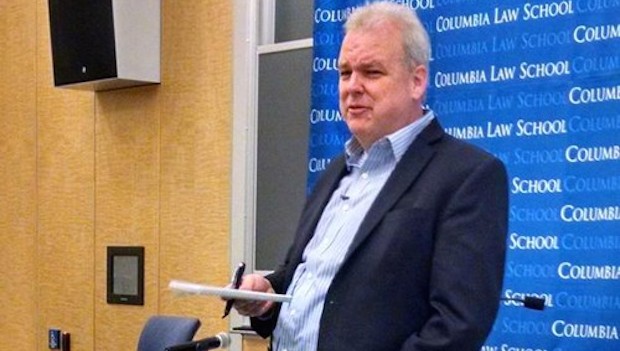
All well and good, but what is it again? According to a report in The Register, HP CTO Martin Fink (pictured) tried to explain composable infrastructure in his keynote speech by comparing it to a composer writing a symphony.
“If you think about a symphony,” he said, “if you think about music, it’s really made up of a very few number of components. In the case of music, it’s notes, tempo, instruments, volume and keys. If you think about it, it’s very easy to change just one of those things and end up with a completely different work.”
Uh-oh. Technically, he’s right. But as an analogy, it stinks. Unless you believe that there’s no such thing as bad music, then you have to accept that how those things are changed and put together doesn’t just create a completely different work, it can also create a really crap piece of work.
In other words, it’s not so much the components as the composer (and, to a lesser extent, the conductor and the orchestra). Right about now, there are probably quite a few businesses and organisations anxiously looking at their IT director or manager and wondering if he or she is a Beethoven, Wagner, Mozart or a really, really bad composer.
I’d name a really, really bad composer at this point but it’s entirely subjective as the classical music community seems unable to agree on who is or isn’t. In fact, all too often a name that pops up in one person’s worst ever list could be in another’s top 10 classical composers of all time (and vice versa).
What we could agree on is that a CEO who wanted their IT infrastructure to run like a Beethoven symphony or a piano concerto by Rachmaninov might not be too happy with a CIO that favoured an approach closer to the atonal composing of Schoenberg or Pierre Boulez. Come to think of it, running your IT department like an atonal or experimental piece of music could well be a recipe for disaster if the “notes, tempo, instruments, volume and keys” all end up at odds with each other.
In truth, it’s probably better to think of infrastructure as less like the composition of a symphony and more akin to the successful performance of a symphony by the conductor and orchestra. The CIO and IT department are the conductor and orchestra performing a symphony to an invited audience and the symphony is very likely to be a popular composition that is played, with minor variations, by conductors and orchestras around the world. The difference is in how one organisation’s conductor and orchestra delivers it.
It’s not as ‘sexy’ as composable infrastructure but ‘performable infrastructure’ could well be a much better bet.





Subscribers 0
Fans 0
Followers 0
Followers