


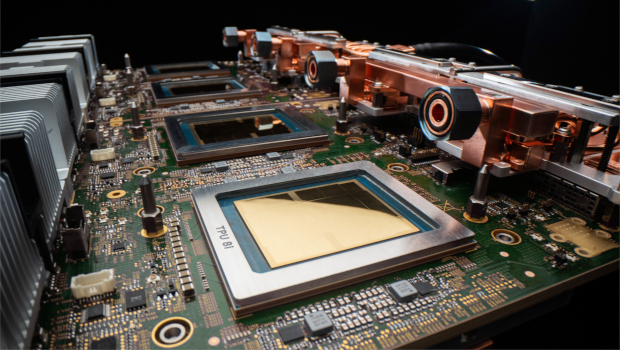
According to a report by The Information, OpenAI plans to purchase tensor processing units (TPUs) from Google. Although the specific financial arrangements remain confidential, the move signals a strategic shift for OpenAI, which has traditionally relied heavily on graphics processors from Nvidia.
For Google, this agreement would bring in a prominent customer for its specialised AI hardware. Although Google only recently began offering TPU hardware to a limited number of external partners for use in their own facilities, interest has risen sharply. This demand is being driven by partnerships with companies such as Anthropic, to the extent that even Google’s own internal research teams have experienced delays in accessing the hardware.
Anat Ashkenazi, chief financial officer of parent company Alphabet, indicated that while Google expects modest revenue from TPU sales by the end of this year, the bulk of the financial returns are anticipated in 2027.

Despite their rivalry in search engines and artificial intelligence, the business relationship between OpenAI and Google is growing ever closer. OpenAI recently announced that its most advanced models will be hosted on Google Cloud. This follows an earlier agreement with Amazon Web Services.
The collaboration follows a period of uncertainty. Reports in mid-2025 suggested that OpenAI was borrowing chips from Google. However, the company initially denied having any concrete plans to integrate them into its systems.
At the same time, OpenAI wants to become more independent in terms of hardware. Together with Broadcom, the company recently unveiled its first custom-designed AI chip. It is expected to enter service by the end of this year.
These developments come amid a huge wave of investment across the sector, with Alphabet, Microsoft and Amazon together expected to invest as much as $600 billion (€538 billion) in AI infrastructure this year.
Business AM

 Ltd






