


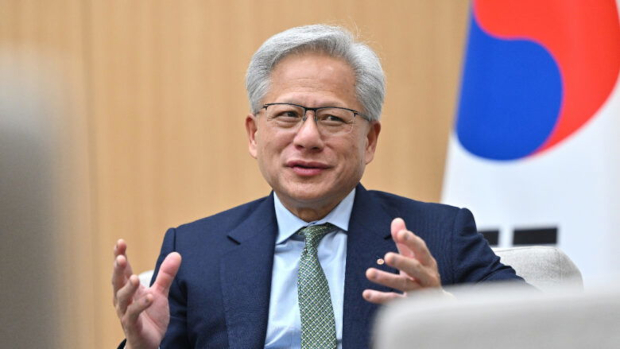
Jensen Huang, the head of Nvidia, confirmed that the $200 billion dollar (€170 billion) CPU market value projected by the company takes potential growth in China into account. That assertion suggests that Nvidia remains optimistic about the region’s long-term prospects, despite the persistent friction between US and Chinese technological interests. The shift towards central processing units is being driven by the rise of agentic AI – autonomous systems that extend hardware requirements beyond the GPUs typically used to train large-scale models.
During a recent financial briefing, Huang highlighted the ‘Vera’ central processors as a gateway to that vast new market. He plans to convince shareholders that Nvidia’s rapid expansion will continue thanks to a diverse customer base and a new pipeline of products designed to surpass the $1 trillion (€860 billion) revenue target for its core AI chips.
It remains difficult for the company to operate in China. Although the US government has granted licences for the distribution of H200 chips and reportedly approved around ten Chinese companies to purchase them, no deliveries have yet taken place. This is partly due to efforts by the Chinese government to give priority to domestic chip manufacturers.

Moreover, recent diplomatic talks between Donald Trump and Xi Jinping, in which Huang was part of the US delegation, have not produced an immediate solution regarding the sale of H200 chips. Despite these obstacles, Huang stressed the crucial scale and importance of the Chinese market.
Huang, who is currently in Taipei for the upcoming Computex event, noted that Nvidia’s support for Taiwanese partners goes beyond previous announcements, in contrast to the $10 billion (€8.6 billion) investment in the region’s AI infrastructure announced by AMD. He also had meetings scheduled with TSMC, the dominant contract chipmaker.
Huang predicted strong demand in the second half of the year for Taiwan’s supply chain, as Nvidia steps up the rollout of the Vera Rubin platform, which integrates both CPU and GPU technologies.
Alongside these growth efforts, Nvidia is facing legal challenges related to export violations. Taiwanese authorities are currently investigating individuals over the unauthorised export of Super Micro servers containing Nvidia hardware. When asked about preventing such leaks, Huang stated that Nvidia applies strict protocols to educate partners on regulatory compliance.
He noted that while Nvidia is rigorous in its guidance, companies such as Super Micro are responsible for their own internal oversight. This follows an indictment by the US Department of Justice in March concerning the smuggling of $2.5 billion (€2.1 billion) worth of AI technology to China via Super Micro employees.
Business AM





 Ltd
Ltd