


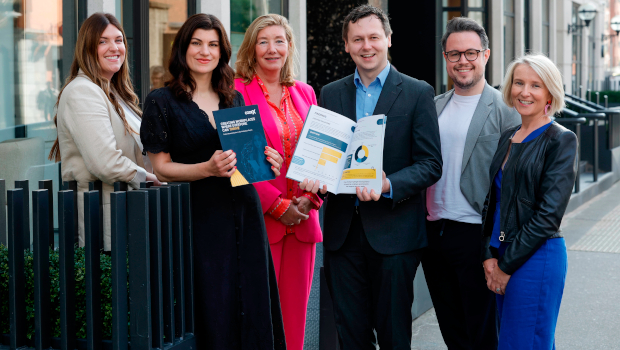
Neurodiversity report identifies common challenges for employers and staff
A new study has identified noise as the most common workplace challenge for neurodivergent employees.
Developed by Codex in partnership with Mark Scully of the Dublin-based Braver Coaching & Consulting practice Neuroinclusion in the Workplace polled 220 neurodivergent employees in full time employment in Ireland and the UK to better understand their daily experiences and specific challenges in the workplace.
The data and insights gathered during this research have been collated to form the basis of the report. The majority of those who contributed to the survey identified with ADHD (162 of 220 survey respondents) followed by autism (137), dyslexia (80) and dyspraxia (62). Most respondents (128) identified with more than one form of neurodivergence.

Noise in the workplace was identified by 61% of respondents as a significant challenge, followed by lighting (56%) and social interaction (55%).
Other commonplace barriers for neurodivergent employees included written or verbal communication, and sensory processing requirements that can be heightened by environmental stimuli.
Notably, the overwhelming majority (94%) respondents agreed that recognising and valuing neurodiversity through education and inclusion initiatives would help create a more supportive and understanding work environment.
“At Codex, we believe the workplace should be a space where every individual feels seen, supported and empowered to succeed,” said Patrick Murphy, CEO, Codex. “However, we also understand that, for many people, traditional workplace structures and expectations can create unnecessary barriers and that is something we want to help change.
“This report outlines the importance of neuroinclusion in the workplace; the insights we’ve learned from talking to people who are neurodivergent; and the actions that employers can take to alleviate some of the barriers that exist in many workplace environments. We hope that by sharing these insights, we can contribute to a broader conversation about how Irish businesses can build truly inclusive workplaces for all employees.”
Codex works with organisations around Ireland to provide specialist support solutions such ‘escape’ pods and quiet spaces for Autistic and neurodivergent people. On foot of its neuroinclusion report, the company will now expand its range of products and services in this area.
“In addition to specific products like quiet spaces, our report highlights some of the ways in which employees can enhance the everyday workplace experience for neurodivergent employees,” said Emily Harnett, Codex’s head of marketing, who has led the company’s focus on neuroinclusion in 2025.
“These can include measures such as flexible work arrangements, clear communication, alternative formats for sharing information, tailored support, regular feedback, neurodiversity training, mentorship, employee resource groups and mental health resources.
“Really though, the most important starting point is an openness to having that conversation,” she said. “From an employer’s perspective, neuroinclusion gives you a varied perspective, different ideas, other ways of looking at things, which can contribute to better ways of working and ultimately greater productivity. We hope our report will be an opportunity for those conversations to start.”
TechCentral Reporters




Subscribers 0
Fans 0
Followers 0
Followers