


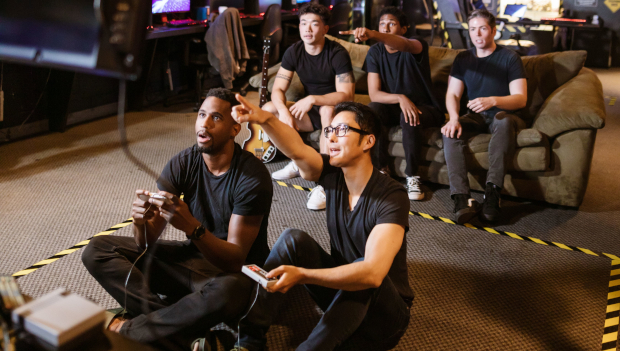
Almost two-thirds (60%) of gamers have made real-life friends through gaming, according to a survey from the Irish Esports Federation (IEF).
The survey of 440 gamers challenges the stereotype of gamers as solitary and obsessives. More than 70% of respondents said they regularly play with friends, family members, online communities, or a combination of all three. This demonstrates that gaming serves as a powerful platform for connection, communication and shared experiences among people of all ages.
The data challenged the perception that gaming and physical activity are mutually exclusive. More than 75% of respondents reported participating in a physical sport outside of e-sports, indicating that Irish gamers are leading active lifestyles while also engaging in competitive and recreational e-sports.

Importantly, the survey found that gaming helps develop skills that are increasingly valued in education and at work, such as strategic thinking and teamwork.
IEF President Steve Daly said: “In the past, gaming has been framed as a solitary, unproductive habit – the IEF survey data shows us a different and more accurate truth. Gaming in Ireland is highly social and helps young people build lasting friendships, develop valuable career skills and participate in team-based activities. Gaming is also deeply woven into youth culture. What it lacks now is institutional recognition, structured pathways, and the kind of support that other competitive youth activity take for granted.”
The IEF survey noted that 92% of secondary students had no e-sports club at school and that 65% would join one, if available. Looking to the future, 70% of respondents said that they would consider a career in e-sports or the gaming industry, with just over half (51%) stating that they would join an e-sports academy for skills and pathways in the sector.
The results from Irish gamers in relation to the relationship between wellness and e-sports performance was also insightful. Some 84% of respondents said play/life balance was vital or very important to them, with sleep ranking highly also at 78%. Overall 86% respondents stated that mental health was very important to e-sports performance.
The IEF believes the findings highlight the positive social impact of gaming and reinforce the importance of recognising esports as a legitimate sporting and community activity that develops teamwork, communication, strategic thinking and leadership skills.
“The survey results come at a time when e-sports and gaming continue to grow across Ireland, bringing together players from diverse backgrounds and creating new opportunities for competition, education and community engagement,” said Daly.
TechCentral Reporters





 Ltd
Ltd