


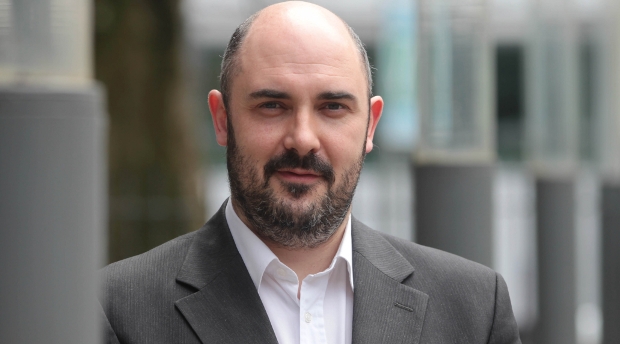
Kieran Conboy (@conboyk) is Professor in Information Systems at the SFI-supported Lero Software Research Centre at NUI Galway. Here he shares his thoughts on building software in today’s world, how his group is helping improve productivity and time-to-market by over 30%, and what to expect from future research in this area.
What do you see as the key pressures facing software organisations today?
Firstly, global competition, offshoring and the rise of open sourcing and crowd sourcing puts traditional software teams under severe pressure to reduce cost, especially as the early problems associated with these alternative approaches are diminishing.
Secondly, software teams are subjected to continuous and dramatic change. Software has to be accessible across an ever-increasing and changing number of platforms and formats with people relentlessly concocting new ways of viewing and using that information. It has to consider a wildly diverse audience – from a tech-savvy ‘digital native’ society with an unrelenting appetite for technology, to the technological needs of people with disabilities to an aging population that potentially may be left behind.
Thirdly, the developer’s job of measuring software value is becoming increasingly complex. Software initiatives need to be cognisant not just of profit but of security, privacy, bullying, technology addiction and other negative, misanthropic aspects of ICT continuously highlighted by popular media.
What kind of projects are being worked on at Lero in Galway?
Here at Lero in NUI Galway we focus on two things: First, evolving methods such as Flow and Agile, adaptive project portfolio management, and lean analytics. These have been shown to reduce cost and time-to-market by over 30% while continuing to serve the ever changing needs of diverse users.
Second, we look at open methods such as innersource, software ecosystems, and crowdsourcing. These allow organisations to reduce cost by leveraging the innovative potential of those outside their development teams, achieving innovation potential previously beyond their reach.
We run a network of excellence including 14 research staff, key international thought leaders, and industry partners such as Dell, Cisco Systems and Information Mosaic. We use scientific and evidence based approaches to help companies to tailor, implement and evaluate methods. We benchmark each against leading international practice, and bring all partners together every eight weeks to share, compare and collaborate.
You are an IT research group but unusually based in a school of business. What insights does that provide?
None of the above challenges are specifically technical – addressing the softer social and cultural issues are often key to successful method adoption. Also, software is no longer the shunned, basement-residing ‘IT Crowd’ operation but is often the core, driving component of a company’s strategy and so methods must coherently and effectively embrace accounting, marketing, HR and other business functions.
The combination of Lero’s software expertise and the innovation and change expertise of the Whitaker Institute at NUI Galway address these issues very effectively. Unsurprisingly, we find that this combination of technical and business skills is exactly what most software product and consulting firms are looking for in prospective graduates.
Where do you see this agile and open research going next?
Technological advancements such as analytics, IoT, artificial intelligence are testing and often breaking the boundaries of current methods, and so we will need to rethink or at least adapt how we build software.
Another key opportunity, and priority for us, is to now apply these agile and open methods outside their comfort zone. It is timely to consider how these can be adapted to public sector bodies such as health and education where cost, value and the needs of the public are of significant concern and media attention.




Subscribers 0
Fans 0
Followers 0
Followers