


| New approaches | |
| “While the adoption of the new approaches to delivering and managing enterprise infrastructures will have particular resonance with larger organisations, they may not be appropriate as in-house solutions for many smaller businesses” |  Arkphire : Howard Roberts, CIO of Arkphire |
| We see many of the new software defined data centre (SDDC) initiatives as being driven from hyper-scale and web-scale architectures, with the goal of bringing cloud-scale economics to the data centre. In order to take advantage of these new approaches, organisations need to consider their next investment in storage and how it will help them move towards a fully virtualised storage infrastructure. Considerations should include:• What software defined storage management tier should I adopt? • Will my existing storage infrastructure integrate with my chosen management tier? • Will my chosen management tier continue to deliver value should I change hardware vendor? • What storage policies will I need to define? • Do I need to consider third platform technologies such as mobile computing, social networking, cloud services, and big data analytics?While the adoption of these new approaches to delivering and managing enterprise infrastructures will have particular resonance with larger organisations, they may not be appropriate as in-house solutions for many smaller businesses. For many small to medium enterprise customers, our advice is “if you think you are too small to implement these solutions in-house, let someone else do it for you”. In many cases, this could mean the adoption of hybrid cloud solutions. Providing common interfaces for managing resources across private and public clouds, together with freedom of movement of data across the hybrid cloud interconnect, are vital to the adoption of this model. While we are seeing a lot of developments in the area of the SDDC, at Arkphire, our focus is on the provision of private cloud solution stacks based on tried and tested reference architectures that provide the highest levels of integration, performance and management, while maintaining the flexibility to build out and enhance our solutions as our customer requirements expand and change.
|
|
| Sizing by IOPS | |
| “Only mission critical and active data, where response times and performance are important, should be held on high performance Tier 1 storage disks. All other data can be stored in low cost, Tier 2 storage” | 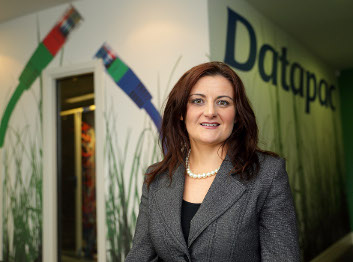 Datapac : Karen O’Connor, general manager service delivery |
| There are some key criteria which need to be considered to have the best approach to storage. Firstly, it’s essential that effective sizing is carried out for any planned roll-out. Storage and capacity requirements should be sized to meet current requirements, while also taking into account future growth needs. The key piece of advice is to always size for Input/Output Operations Per Second (IOPS). This will ensure performance can be optimised. Secondly, some organisations roll out new storage with lots of capacity and experience great performance but the backups may be over running or not actually happening at all. Backup, recovery and storage should be designed side-by-side and implemented as a unified solution. Storage tiering also needs to be considered. Many organisations pursue the costly approach of storing all business data, whether mission critical or not, on expensive high performance disks. Only mission critical and active data, where response times and performance are important, should be held on high performance Tier 1 storage disks. All other data can be stored in low cost, high capacity Tier 2 storage environments. Businesses can save a lot on storage costs by reducing the need to purchase expensive disks to manage growing data volumes. With regard to leveraging existing assets, that should always be looked at carefully, considering support and warranties. Sometimes it’s more costly to retain older kit than it is to purchase a new storage platform. A good service provider should be able to offer you expert advice on your unique set of circumstances and needs. Datapac provides customers with a wide array of storage solutions, advice and proactive support. It partners with and has advanced levels of accreditation with the leading players in the storage market. |
|
| Comsys | |
| “Health checks of existing SAN environments has proven to be very effective in extending the life of SAN infrastructure, simply by identifying and eliminating bottlenecks and unseen technical issues” |  Comsys : Ben McGahon, manager director |
This is an ongoing challenge in every customer environment – how do you take advantage of the new storage technologies and at the same time get the best possible use and value out of your existing IT infrastructure? For a customer to decide on a new storage technology, they first need to understand their exact requirements as much as possible. This is best achieved by engaging a technology partner like Comsys, who can guide a customer through the data gathering and analysis of their environment. Once this has been completed, the customer can then compare their needs to current storage technologies to find the best solution.Since performance degradation is usually very gradual over time, in many customer sites we have found that by conducting a detailed health check of the existing SAN environment, we have identified several areas where the current system can be optimised to dramatically increase performance. This has proven to be very effective in extending the life of the existing SAN infrastructure, simply by identifying and eliminating bottlenecks and unseen technical issues.If it is deemed that new storage infrastructure is needed, all the technical options must always be examined in the context of what the business is doing and what the business strategy is. IT strategy has to be aligned with the business strategy as closely as possible to ensure the right fit of technologies is being utilised to support the business going forward. There is no point buying technology just because it’s the latest thing out; it’s got to make sense with the overall IT strategy as it supports the business requirements.
Comsys have introduced several new technologies into our enterprise customer sites over the years. Right now, the emerging technologies we are bringing into customer environments to enhance the existing storage are things like: server side caching technology, software defined storage technology like ViPR from EMC and exciting new solid state storage technology. New solid state technologies such as MRAM, true hybrid drives and SST RAM will further increase performance, density and decrease cost for customers. This will revolutionise the performance of SAN’s, with arrays doubling or tripling performance compared to today’s levels.
|
|



 Ltd
Ltd