


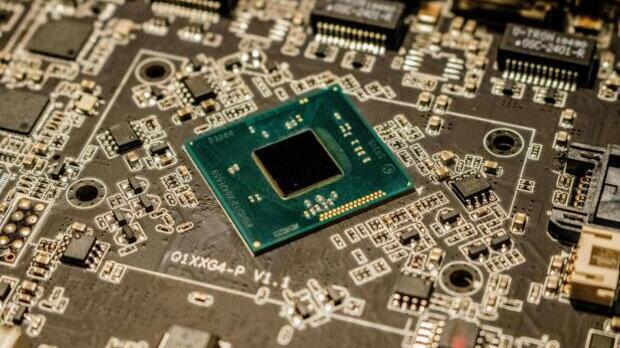
When Sophie Wilson and Steve Furber designed the Arm processor at Acorn Computers in the early 1980s, they were solving a mundane problem: how to build a fast chip cheaply enough that Acorn could turn a profit on it. Nobody at the company, least of all its two young engineers, imagined their solution to that unremarkable constraint would, four decades later, be at the heart of virtually every smartphone on the planet and, now, the artificial intelligence infrastructure that is reshaping the global economy.
Key to the CPU’s success was thriftiness: as plastic packages were significantly cheaper than ceramic ones, Furber and Wilson planned for low power use in order to reduce heat and, thus, make a plastic package possible.
The unexpected upshot of this, which took decades to come to fruition, was that Arm-derived CPUs are so power-efficient that they now power an estimated 95% to 99% of smartphones globally.

Notably, until now, Arm has not itself designed and manufactured chips as such. True, early Arm CPUs were manufactured for internal use by Acorn, making 1987’s Archimedes computer the only low-cost RISC-based chip on the market at the time. However, Arm took its first steps on the real road to success when it became a semiconductor design licensor for other manufacturers.
This matters because the x86 steamroller has, over the decades, crushed virtually every competitor – including ones that would have been an improvement on x86. MIPS, PowerPC, Alpha, Sparc, all of these promising architectures, designed on clean sheets in the 1980s, still exist, but not in anything we would call mainstream computing.
Indeed, both of Intel’s own attempts to replace x86, the iAPX 432 and Itanium, were utterly flattened by extensions to their predecessor, designed by AMD in the case of x86-64, much to Intel’s chagrin.
The other major processor alternative architecture in use today, RISC-V, received a small filip when it was reported this week that Chinese e-commerce outfit Alibaba has developed XuanTie C950, a new server chip fine-tuned for AI use.
Nevertheless, whatever the power of the XuanTie C950, there is a sentiment abroad that RISC-V has hit a performance wall. This is likely not a permanent state of affairs, resulting as it does from RISC-V chips mostly lacking the microarchitectural complexity of high‑end Arm and x86 cores. In other words: it’s a problem that can be solved, but history tells us that the cheap and ubiquitous x86 CPUs – and, of course, the relentless march of Nvidia GPUs – will fill the vacuum.
The licensor’s dilemma
Arm’s move into finished chip production does not come from nowhere. The company has already shown a willingness to tighten its grip on how its designs are used, most recently in a protracted legal battle with Qualcomm over whether chip designs acquired through the latter’s purchase of silicon firm Nuvia required a new licence. The court largely found against Arm, but the affair illustrated the central tension in its business: Arm needs its licensees more than its licensees need Arm, and both sides know it.
Arm’s new 136-core chip, built on a 3-nanometre process and drawing just 300 watts, is aimed squarely at AI data centres and was developed at the behest of Meta Platforms and OpenAI, which will be its first customers. Arm’s chief executive Rene Haas argues the case for the chip on the grounds that agentic AI workloads, where software agents query models at far higher rates than human users, will require vastly more CPU cores alongside the GPUs that currently dominate AI infrastructure, pointing to a total addressable market of $100 billion for AI-focused CPUs by 2030.
Arm making its own chip is a surprise precisely because the CPU architecture has thrived by being licensable. Arm today is best-known as a component of so-called Apple Silicon like the M-series CPUs found in Macs as well as A-series CPUs in iPhones, alongside the various CPUs that run Android phones. However, this success was only possible because the architecture was available to other chip designers, from Apple, which used it in its ill-fated Newton portable device, to Digital Equipment Corporation, whose StrongARM CPU showed what the architecture could do in more powerful hands.
Dependency sells
The pressure on Arm’s business model is not abstract. Apple and Qualcomm, its two most important customers, have both developed their own custom CPU cores that are based on Arm’s underlying instruction set architecture but do not use Arm’s own core designs. This matters commercially: a full core licence, in which a customer uses Arm’s own CPU designs wholesale, is significantly more valuable to Arm than an instruction set licence, which merely grants permission to build a compatible chip. As Apple and Qualcomm have grown more sophisticated, they have grown less dependent on what Arm actually sells.
In this sense, Arm’s two most important customers have become its most significant competitors. The move into the data centre looks less like strategic confidence than like a company searching for a market where that dynamic does not yet apply.
By targeting the data centre, Arm hopes to capture a far larger share of the value its architecture has hitherto generated for others.
This is not an unworkable plan, but it carries a risk that cuts to the heart of how Arm won in the first place. The architecture succeeded because it was the rising tide that lifted all boats: open enough that Apple, Qualcomm and countless others could build enormously valuable businesses on top of it. By competing directly with those same companies in the data centre, Arm risks making itself a less attractive partner everywhere else, potentially ceding the broader ecosystem to x86 for another decade. Whether it can sell its own chips without undermining the conditions that made those chips worth building remains, to put it generously, an open question.


 Ltd
Ltd