

How an Irish skills organisation is helping Europe build advanced digital talent
In association with Digital Technology Skills
Digital Technology Skills is a lead Irish partner in the pan-European Digital4Business programme, and plays a prominent role in the ongoing development and rollout of other high-profile EU-funded upskilling initiatives, such as GreenShift (AI & HPC applications for the transport sector), Digital4Security (pan-European Master’s in cybersecurity management), Digital4Sustainability (digital and green transitions within the ICT sector) and the recently concluded ARISA (Artificial Intelligence Skills Alliance) project.
As a leading player in the Irish and European digital skills landscape, the organisation has a deep understanding of the deficits and needs of the market.
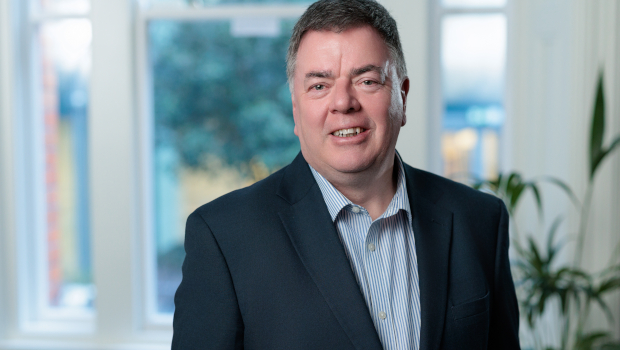
There is a significant digital skills gap in European businesses, says Dave Feenan, director of Digital Technology Skills, but the focus shouldn’t rest solely on digital skills. “The major challenge today is with leadership teams. Technology literacy, understanding FinOps – digital financial operational costs – sustainable compute, and creative thinking mapped to an innovative mindset is required. In short, we need to look at the fusion of digital skills and inter-personal skills,” he says.
When it comes to embracing AI – while there is a rush now to acquire AI skills – governance, policy making and ethical AI guidance will be equally important to organisations onboarding AI, explains Feenan.
But confusion around the technology persists. “The question posed regularly to the team at Digital Technology Skills – who also manage the Technology Ireland ICT Skillnet Network – is “Where do we start?”. With so much commentary about AI crossing our radar daily, it’s no wonder companies are confused.”
Industry-led programmes like Digital4Business could provide the answers. “Industry has the ability to ‘horizon scan’ and propose emerging trends and identify unmet needs. We spend our days engaging with industry to identify the gaps and then bring together the right mix of experts, training providers, and education partners to develop targeted solutions, including accredited programmes where required.”
Feenan says Ireland is an exemplar at maximising the ‘triple helix’ of state funding and academic delivery to meet industry needs, and the Digital4Business programme, which is funded by the EU, is an example of this model in practice.
“Industry collaborators assisted in proposing the construct and content of the modules and advice on how the workforce of today is embracing up-skilling. We introduced Recognition of Prior Learning (RPL) into the process to facilitate individuals who may not have the academic qualifications but have years of industry experience. Almost 10% of the January 2026 students joined the programme via the RPL route.”
Learning model
With a hybrid learning approach, the Digital4Business programme uses lectures, individual study and hands-on lab work, and strategies like problem-based learning and the flipped classroom model to bolster engagement and understanding.
For the September cohort, as well as the 400 fully funded places on offer for the full time Master’s and Micro-credentials are 100 scholarship places available specifically targeting learners facing socioeconomic barriers, underrepresentation in STEM, or geographic disparities. This scholarship scheme serves as a structured inclusion mechanism to ensure vulnerable groups are prioritised and supported.
With this approach, the work of Digital Technology Skills is supporting the move towards the ‘no one gets left behind’ culture that’s so important to bridging that digital skills gap.
”Digital literacy is not just about using a device and that’s why it’s essential we promote digital literacy across society,” Feenan explains. “There is considerable digital literacy poverty in Ireland and as more and more services – including government supports – are delivered electronically, we need to make sure that our citizens are modernising their digital capabilities too.”
Feenan knows that for Irish and EU upskilling initiatives – like Digital4Business – to remain relevant, constant updating and vigilance is required. He points to the Technology Ireland ICT Skillnet Steering Committee, which consists of tech leaders from industry who work with the group to consistently tweak its strategy and course content.
“A great example of how we work is the National Masters in AI at University of Limerick where our Industry Advisory Board meets with the academic faculty twice a year to review modules, discuss student feedback and undertake agreed actions to negate the obsolescence of the modules.”
Its relevance has become a key selling point – witnessing a 115% increase in expressions of interest in this Master’s course since 2023.
Digital4Business is co-funded by the EU and has been developed to support long-term competitiveness, innovation and growth across European businesses. The deadline for applications is 20 June 2026.
Further information is available at Digital4Business.eu.




Subscribers 0
Fans 0
Followers 0
Followers