


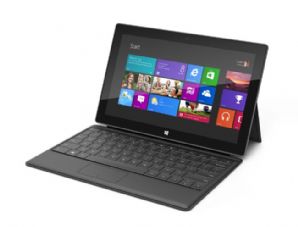
An awful lot has been said in the short time since its announcement, about the Microsoft tablet the Surface which runs Windows 8.
That dreaded phrase "iPad killer" has been tripping off the tongue of many and has been committed to ink (OK, digital ink) across a range of publications.
The impression one gets from some coverage is that Microsoft is finally getting itself in gear to take on Apple and carve out a slice of the tablet market for itself by toppling the iPad. With so many tablet makers in the market failing to make any dent in Apple’s dominance with the iPad, this has led to much speculation as to how Microsoft will fare in the fight. In fact, one analyst, Roger Kay, Endpoint Technologies Associates, went so far as to say that the family of Surface tablets would alienate Microsoft’s traditional hardware partners.

To be honest, I think this is a complete misreading of the situation. In the technology game, there is a tried and trusted strategy when introducing a new departure in technology. Both Intel and AMD have a long standing practice, when a new line of processors is introduced, of creating a reference chipset to go along with it and make the best of new capabilities. The motherboard manufacturers take on the new chipset until they make their own studies and usually develop their own chipsets with additional capabilities. This reflects the close development relationships that exist between the chipmakers and their traditional hardware partners.
Closer to home, Google has cooperated with both HTC and latterly Samsung to create reference hardware to showcase new versions of the Android operating system. These handsets are usually pretty cutting edge when released and often feature new capabilities to the market, such as the Near Field Communications (NFC) features in the Google Nexus S, manufactured by Samsung.
Back to Microsoft then, and as Redmond has created a new departure in Windows 8 for tablets, it makes sense that the first devices created for it would be optimised to exploit the OS to its fullest. This, Microsoft probably reasoned, is best done with full control of the reference design. The Surface family is the result and ready to be released in the barrage of Windows 8 marketing along with the PC version and now the Phone version too, all of which will share a kernel. With a suitable market established, Microsoft will sit back and discontinue the hardware and develop the OS for its traditional hardware partners.
As such, the job of "iPad killing" will really be taken on by the hardware manufacturers not Microsoft itself. What Redmond is more interested in is a legion of diverse devices that will run Windows 8, not devising, developing and making hardware. Killing the iPad is frankly a daft notion and will not happen. What will likely happen is that users will see a Windows 8 tablet as a viable alternative to an Android or iOS device and attracted by compatibility with an existing device, be it an Xbox, Windows PC or Windows Phone, will acquire Windows 8 based tablets in sufficient numbers to give Microsoft a foothold in the tablet market.
All this I was outlining to a colleague thinking, hey that would make a good blog post, when I had an alert on my screen for a Twitter post from a tech site that I follow.
I click on the link and lo, there was a story about the chairman of Acer saying that Microsoft wasn’t out to alienate its hardware partners with the Surface line, but rather was whetting appetites and that partners would likely benefit from the overall marketing bonanza around Windows 8 for tablets anyway.
"Yeah, what he said!" says I.



Subscribers 0
Fans 0
Followers 0
Followers